
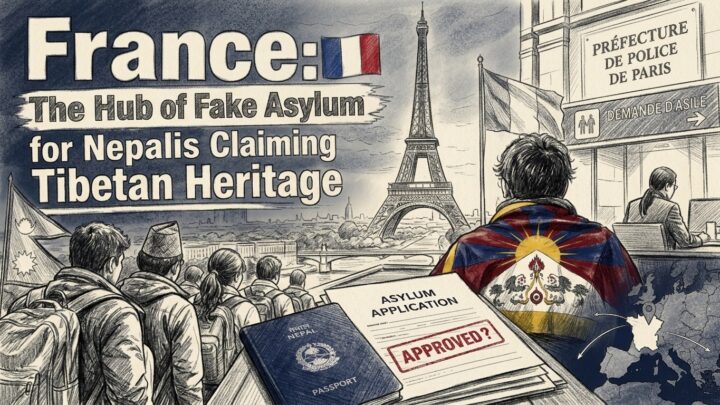
How shrewd Nepalis are deceiving the French government and gaming Europe’s refugee system
How a weak asylum system, ambitious brokers, and rehearsed identities have allowed a quiet fraud to flourish in plain sight
Europe is now facing its most difficult immigration challenge in decades — managing the asylum system, controlling irregular entry, and answering what “protection” actually means in an age of mass migration. At the center of this storm is France. Its geography, policies, and proximity to Britain have made it both a magnet for migrants and a transit corridor for those trying to cross the English Channel.
For most migrants, the reasons for coming are straightforward — work, safety, education, and the hope of a stable future. But a darker pattern has taken root inside the same system: people who are not fleeing persecution, but claiming asylum because a fabricated identity and a rehearsed story offer the fastest route into Europe.
Rising Asylum Applications in France — and Why Europe Became Attractive
Europe’s social-security systems, legal rights, and job opportunities attract people from around the world. Many travel to escape war, political instability, or poverty, or to give their families a better future. France’s particular draws include linguistic ease for some communities, a large already-settled immigrant population, and relatively accessible public services — all of which make it an especially attractive destination.
For some, Europe is not only opportunity; it is seen as the “safe option,” easier than other legal routes. There is also a widespread belief that having a child in Europe makes it easier to obtain a residence card and health coverage, and that the presence of a child makes it legally more complicated to deport the parents.
The statistics support the broader pressure. According to France’s refugee agency OFPRA, 131,254 applications for international protection were registered in the country in 2022, of which 115,091 were first-time asylum applications. That number rose further in 2023 to about 142,500, including roughly 123,400 first-time applications.
France has become one of Europe’s largest destinations — offering the right to work, social assistance, and family protection that many other countries do not guarantee to the same degree. Some migrants use France only as a transit country, intending ultimately to reach Britain. When that plan fails, they often remain stuck in France. France and Spain in particular bear this pressure: both countries do not strictly enforce the Dublin Regulation (which is supposed to return asylum seekers to the first EU country they entered), and even amid serious labor shortages they have not opened substantial legal labor-migration pathways.
Many migrants believe — and the belief is not entirely groundless — that France needs workers, and that the current government has a political interest in keeping immigration policy relatively flexible. There is also a widespread perception that a person can live indefinitely without papers by working for cash. Because the Dublin Regulation is applied so weakly, that perception often proves true in practice.
This undocumented cash economy keeps the cycle going. Labor shortages in various sectors mean employers — and, indirectly, the state — appear to tolerate undocumented work rather than crack down on it. There is also a little-discussed legal pathway: enlisting in the French Foreign Legion, which allows applications even from people who entered on a valid visa — adding yet another incentive to get inside the country by any means.
France’s role as a gateway to the United Kingdom has grown further. Britain now requires 20 years of residence for settled status, the United States has tightened immigration, and Portugal has extended its residence period to as long as 10 years — all of which push people toward France as the last relatively accessible hub.
After failed attempts to enter Britain, most remain in France. And after Trump-era restrictions made the American route more expensive and risky, Europe — especially Spain, Italy, and France — became the main alternative destination for migrants worldwide.
The Story the Media Does Not Tell: Fake Asylum Claims by Nepalis
European media coverage usually prioritizes the dangerous, illegal small-boat crossings of migrants from Africa, the Middle East, and Pakistan. Cases of asylum fraud involving Nepali citizens, however, have not become headlines.
Crossing the English Channel in small boats (the “donkey route”) has now become a major phenomenon: more than 200,000 attempted crossings have been recorded since 2018. Indians, Pakistanis, Bangladeshis and others have increasingly used France as a staging point. But a shrewd Nepali network that flies in on seasonal visas via other European countries and then files fake asylum claims in France has so far been beyond the French government’s capacity to contain.
This is the clever method adopted by the Nepali community and organizations there — outwitting the European system itself. Using various tactics, the fake-asylum business continues quietly in France, hidden from view, by deceiving the French system. And this has been going on continuously from earlier years until now. In fact, it is said that 99% of immigrant Nepalis are fake, yet so far neither have the French authorities caught those networks, nor has the practice been stopped.
In recent years, the number of Nepalis claiming asylum in Europe has risen markedly because of the growing activity of human-trafficking and smuggling networks. Most applicants arrive in Europe on tourist visas, or after student visas have been refused, and apply for asylum as soon as they land at the airport — in some documented cases, immediately upon disembarking.
In most cases the main motive is not fear of persecution — it is economic opportunity and the desire for permanent residence in Europe. To get there, some Nepalis have been constructing fake Tibetan identities, fabricated stories of political persecution, or other false details.
France: The New Center of Tibetan Identity and Fake Asylum Claims
In the past, Nepalis seeking to reach Europe based their asylum claims on political violence from the Maoist conflict, or used human-trafficking routes linked to the Bhutanese refugee affair. But after the Bhutanese refugee scandal drew international attention and even former ministers came under legal scrutiny, brokers have recently found a new door — asylum applications based on Tibetan identity, or on claims of ethnic and gender discrimination.
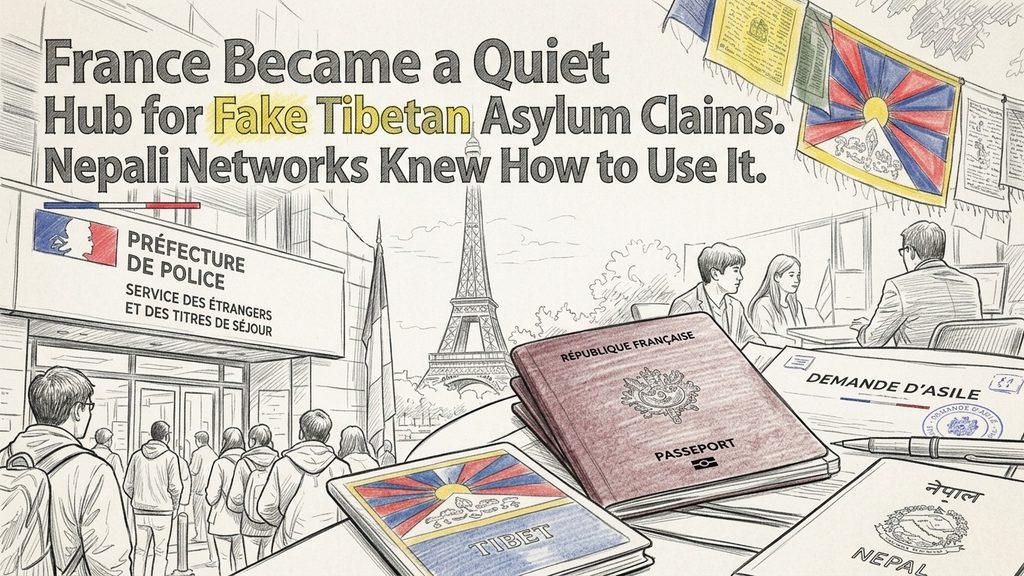
The scheme is said to work like this: Nepalis of Mongolian origin — communities such as Gurung, Magar, Rai, and Limbu, whose facial features resemble those of Tibetans — are coached for about a month in the Tibetan language and dress, specifically to convince French immigration officers that they are Tibetan refugees. Critics point to an obvious gap in the system: people who entered France on Nepali passports later claim to be Tibetan when they apply for asylum, and French immigration officers reportedly do little to check or cross-verify these inconsistencies.
In Nepal today, incidents of caste or ethnic discrimination occur only sporadically, and more in remote villages than in urban areas. The real victims do not enter Europe; they remain victims of discrimination inside the country. But many people use those same news stories as a basis to enter Europe, insert their own names into printed newspaper reports of persecution, and then file asylum claims.
Many women file asylum applications after submitting fake divorce documents in order to strengthen claims of gender-based persecution.
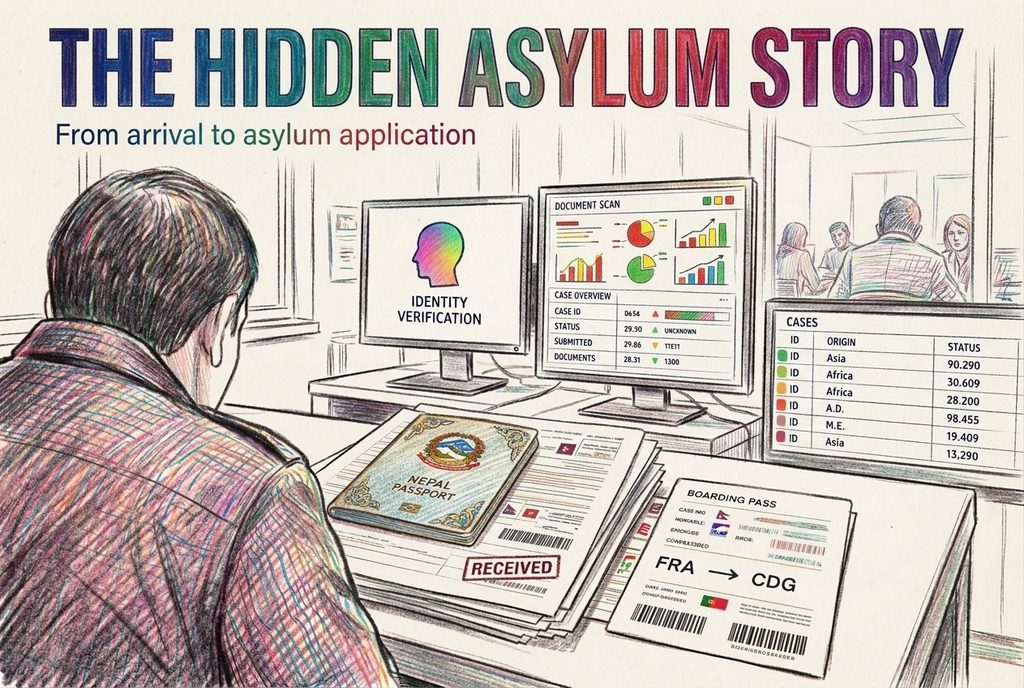
What is astonishing is that these same fake applications have been approved in rapid succession: some people have already obtained European passports, and others are living on refugee cards. Those who received the cards then continue the practice of calling relatives and friends from Nepal to France while concealing their identities, and having them apply as well.
Europe’s Weak Asylum System and Nepali Cunningness
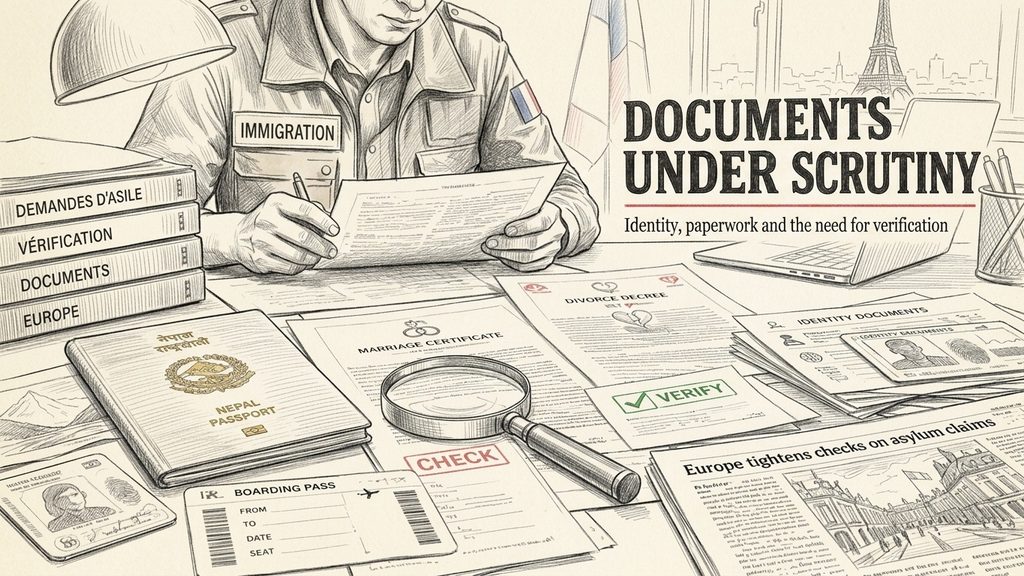
France’s weak enforcement, and its past record of issuing refugee documents relatively easily, has given brokers even more encouragement to push additional Nepalis into filing fake applications. After applying, applicants typically deactivate their Facebook and Instagram accounts, delete old photos, and otherwise erase their digital identities — a coordinated effort so that the new, fabricated identity does not collide with the old one.
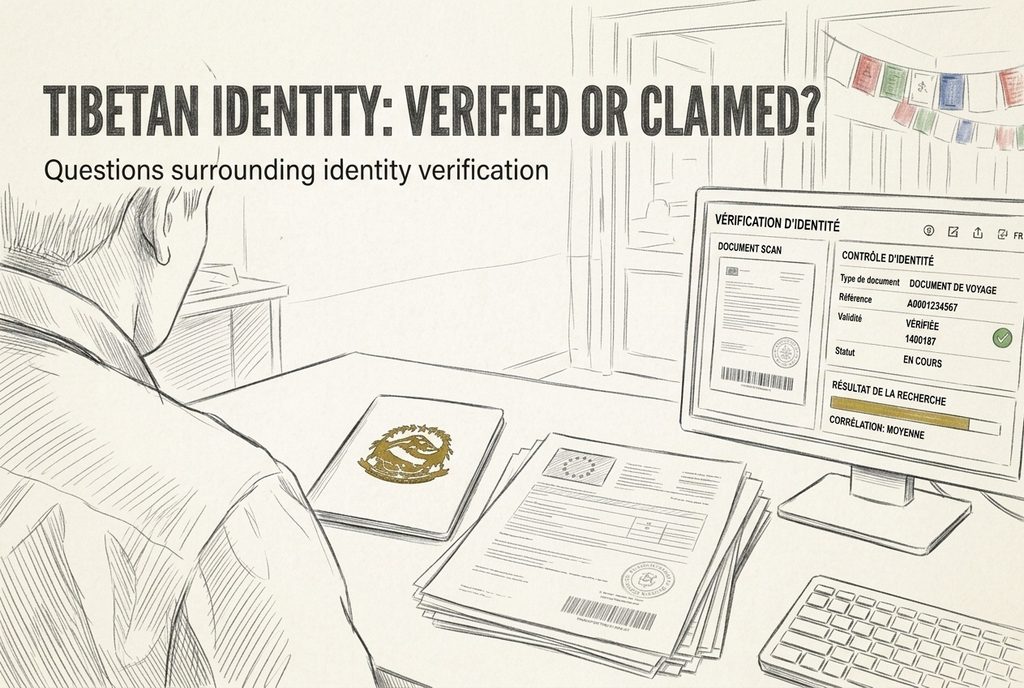
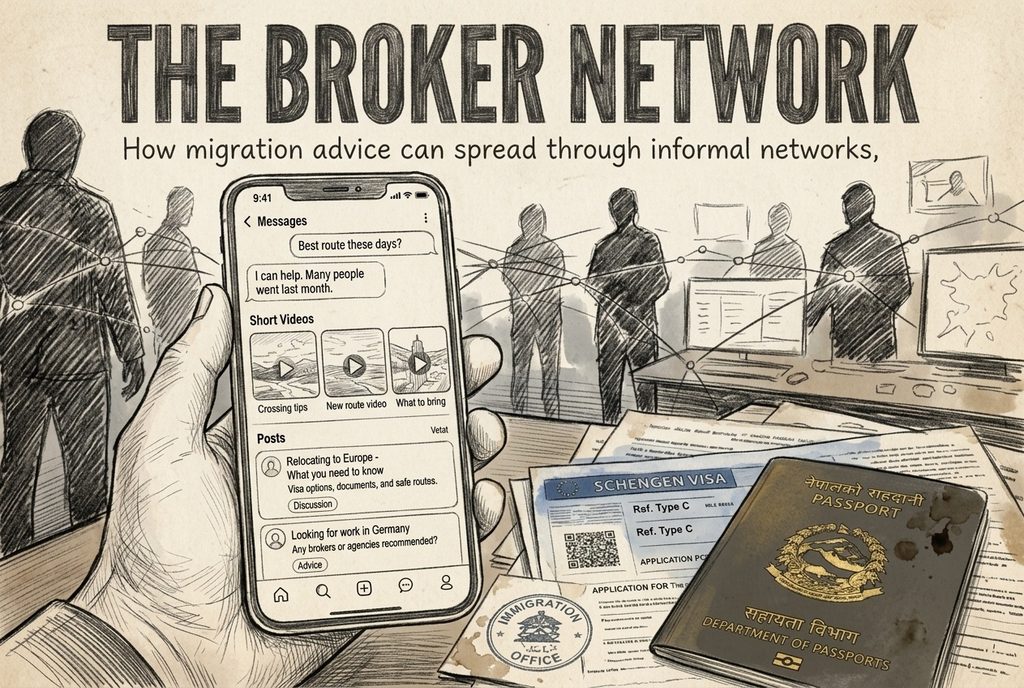
On the other side, TikTok has become the main marketplace connecting brokers and prospective applicants. Services that “will make you a fake asylum case” are openly advertised through TikTok Live, while videos explaining the “donkey route” spread widely. Even so, the French government has not implemented any meaningful monitoring or AI-based content-verification system to catch this activity. Although there is a Nepali embassy in Paris, there are complaints that French officials barely coordinate with the embassy to verify applicants’ documents.
The combination of hidden passports, changed names, and rehearsed background stories has made it genuinely difficult for officials to distinguish genuine refugees from fake ones.
What Was the Purpose of the Asylum System?
Fake claims do not only abuse the system — they harm the very people the system is supposed to protect. Europe needs a more balanced approach: genuine protection for real refugees, and firm consequences for those who abuse the system.
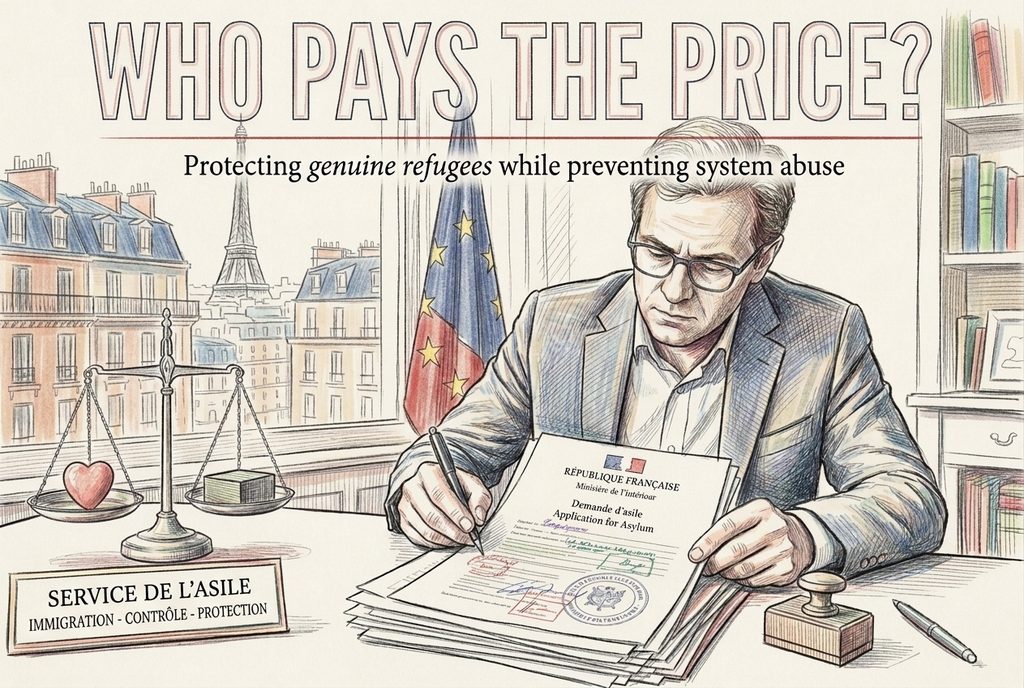
The purpose of asylum is to give safety to people fleeing persecution, war, ethnic or religious violence, and political danger — this is both a humanitarian commitment and an international legal obligation. But when people invent false stories even though they face no real threat, it weakens public trust in the entire system and makes it harder for genuine refugees to be believed. Fraud must be controlled. But adopting blind harshness that ends up punishing real victims would be equally wrong.
Conclusion
Fake asylum claims extract a real price — they take time, resources, and protection that belong to people fleeing war, conflict, and danger to their lives. To address this, French immigration authorities must significantly tighten their verification systems. At the same time, the governments of Nepal and France need to launch serious joint legal action against the trafficking and smuggling networks that profit from this fraud.
How many fake asylum claims has France actually approved — and who is responsible: French immigration, or the Nepali brokers running these schemes?
Hashtags
#France #Nepal #Asylum #Immigration #EU #Refugees #Tibet #MigrationCrisis #FakeAsylum #HumanTrafficking #OFPRA #DublinRegulation #TibetanRefugees #NepaliDiaspora #EnglishChannel #DonkeyRoute #TikTokBrokers #RefugeeFraud #EuropeanUnion #Paris #Gurung #Magar #Rai #Limbu #FrenchImmigration #AsylumSeekers #BorderSecurity #MigrationPolicy