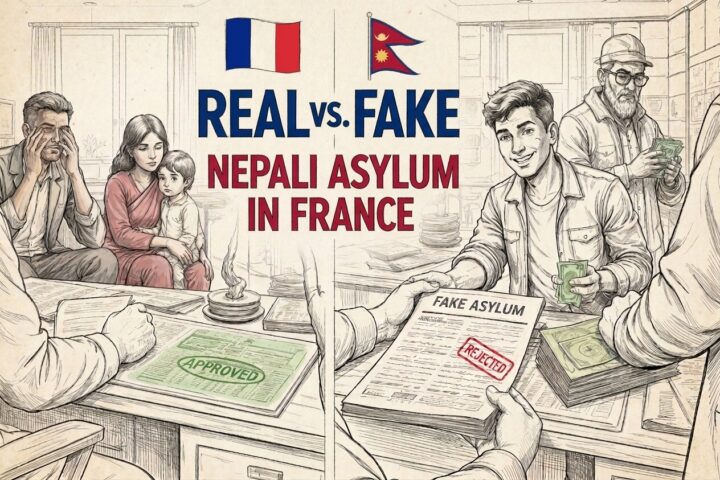
What happens when economic dreams collide with a system designed to protect lives? In recent years, France has emerged as a popular destination for Nepali migrants seeking better opportunities. While some applicants arrive with genuine fear of persecution, a growing number of claims appear driven by economic motives rather than real danger. This trend is straining France’s asylum system, delaying protection for those who truly need it, and damaging the reputation of the wider Nepali community abroad.
This article examines the rise of fake asylum claims by Nepalis in France, the organized networks behind them, the human and systemic costs, and practical steps for reporting fraud. It also highlights safer, legal pathways for those seeking opportunities in Europe.

Understanding Asylum: Protection vs. Economic Shortcut
Under international refugee law and the 1951 Refugee Convention, asylum is reserved for people who face a well-founded fear of persecution because of race, religion, nationality, membership of a particular social group, or political opinion — and who cannot receive protection from their own state.
In France, the Office Français de Protection des Réfugiés et Apatrides (OFPRA) examines every claim. Genuine asylum is evidence-based and relatively rare for Nepali nationals because Nepal is generally considered a stable democracy with functioning institutions. In contrast, fake asylum claims involve fabricated stories, forged documents, and coaching designed to secure a residence permit and work rights through the refugee channel.
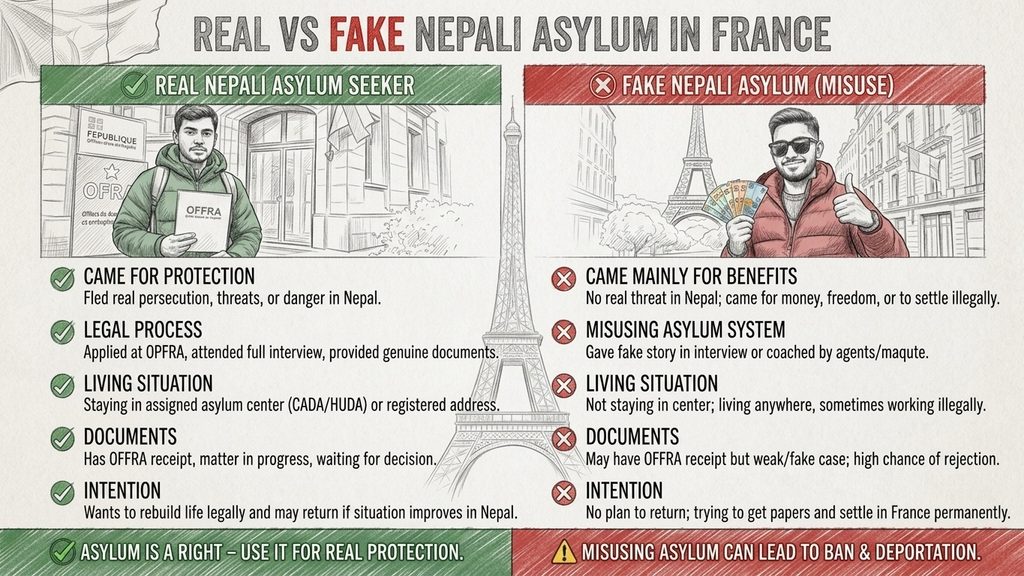
Real Asylum vs. Fake Asylum – Clear Differences
- Real asylum: Life-threatening political, ethnic, or social persecution in Nepal where the state cannot or will not protect the individual. Strong, verifiable evidence is required.
- Fake asylum: Scripted narratives, false documents, and coached interviews used primarily as a workaround for stricter economic immigration rules.
The Scale of Asylum Applications and Why Nepali Claims Stand Out
France receives more than 150,000 asylum applications every year. Although Nepali applicants form only a small fraction of the total, their numbers have become noticeable in certain regions and decision-making offices. Globally, thousands of Nepalis file asylum claims annually. The concern arises when a significant share of these claims appear to be economic rather than protection-based.
Repeated low-merit applications from nationals of relatively safe countries can lower overall protection rates and increase skepticism among case officers. France’s first-instance protection rate has hovered around 38–40% in recent years. Flooding the system with weak claims slows processing for everyone — especially genuine refugees.
How Organized Networks Turn Asylum into a Business
A troubling development is the rise of organized networks within parts of the Nepali diaspora that treat the asylum process as a commercial service. These groups charge families between 1.4 and 1.8 million NPR (approximately USD 10,000–13,500) for coaching, forged documents, and logistical support.
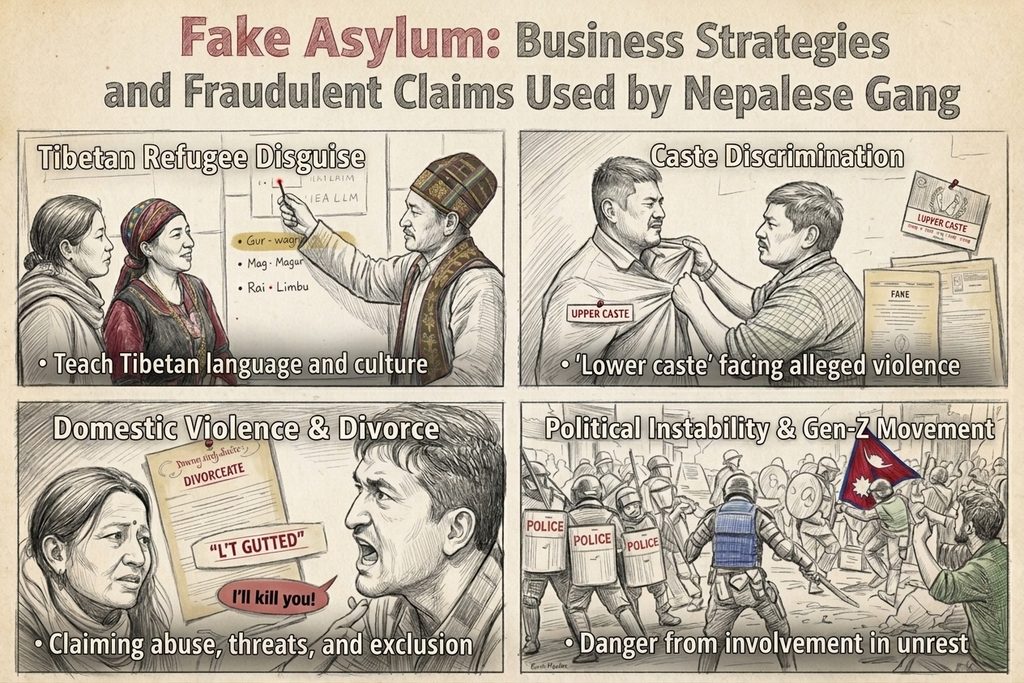
Common Fabricated Narratives
- Posing as Tibetan refugees: Selecting applicants with Mongoloid features (Gurung, Magar, Rai, Limbu) and training them for 1–2 months in basic Tibetan language, culture, and religious practices.
- Ethnic or caste-based persecution: Inventing severe discrimination and violence stories that do not match the applicant’s actual background.
- Domestic violence and family threats: Especially targeting divorced or single women with claims of social ostracism and life-threatening family pressure.
- Political persecution: Citing involvement in recent youth movements or old Maoist-era conflicts without genuine risk.
Coaching often includes cleaning social-media profiles, preparing fake police reports, medical certificates, and news clippings, and rehearsing consistent interview answers. Some applicants first enter Europe on student, tourist, or seasonal work visas before switching to asylum. Others are moved through intermediate countries such as Austria, Croatia, or Romania before being directed into the French asylum system.
A Dangerous New Form of Human Trafficking
When legal pathways to residence tighten, desperate families become easy targets for agents who promise a “shortcut” through asylum. The high fees, debt, and pressure to stick to false stories create a modern variant of human trafficking. Relatives already settled in Europe sometimes participate by coaching newcomers. Other networks operate under the guise of community organizations or “social service” groups.
The result is exploitation, family debt, risk of criminal charges for document fraud, and long-term damage to the individual’s future mobility.
Who Really Pays the Price?
When the asylum system is overloaded with questionable claims, the costs are shared widely:
- Genuine refugees face longer waiting times and higher scrutiny.
- Public trust in the asylum system erodes, making societies less willing to offer protection.
- The Nepali diaspora suffers reputational harm. Hardworking migrants who follow legal routes can be stereotyped as “asylum scammers.”
- Nepal’s international image is affected when large numbers of unfounded claims originate from a country that presents itself as stable and democratic.
How to Report Fake Asylum Claims and Document Fraud
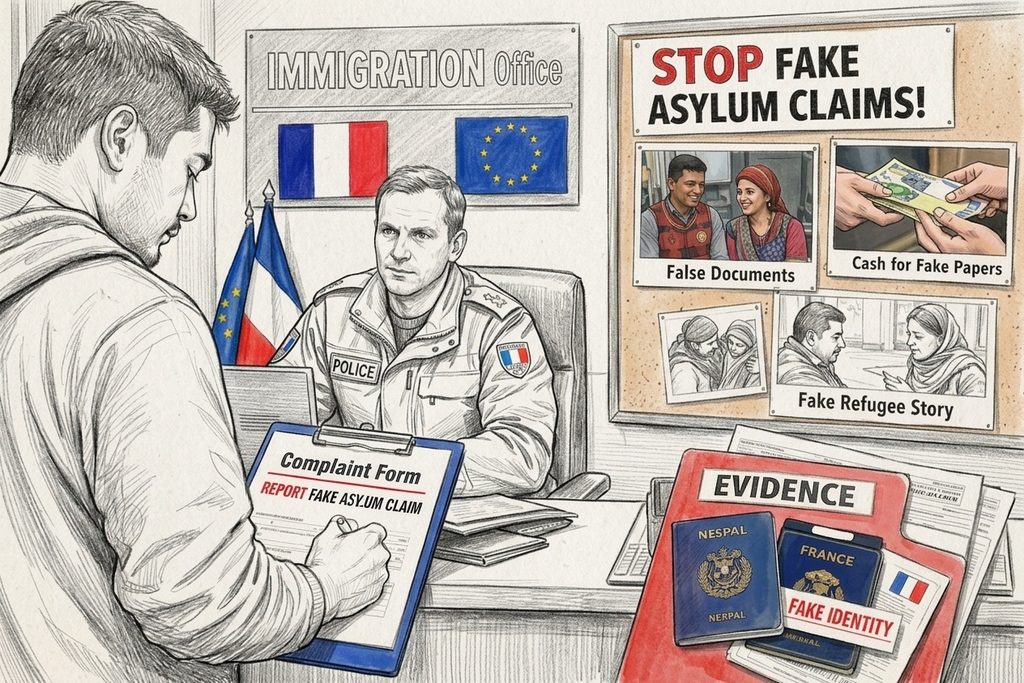
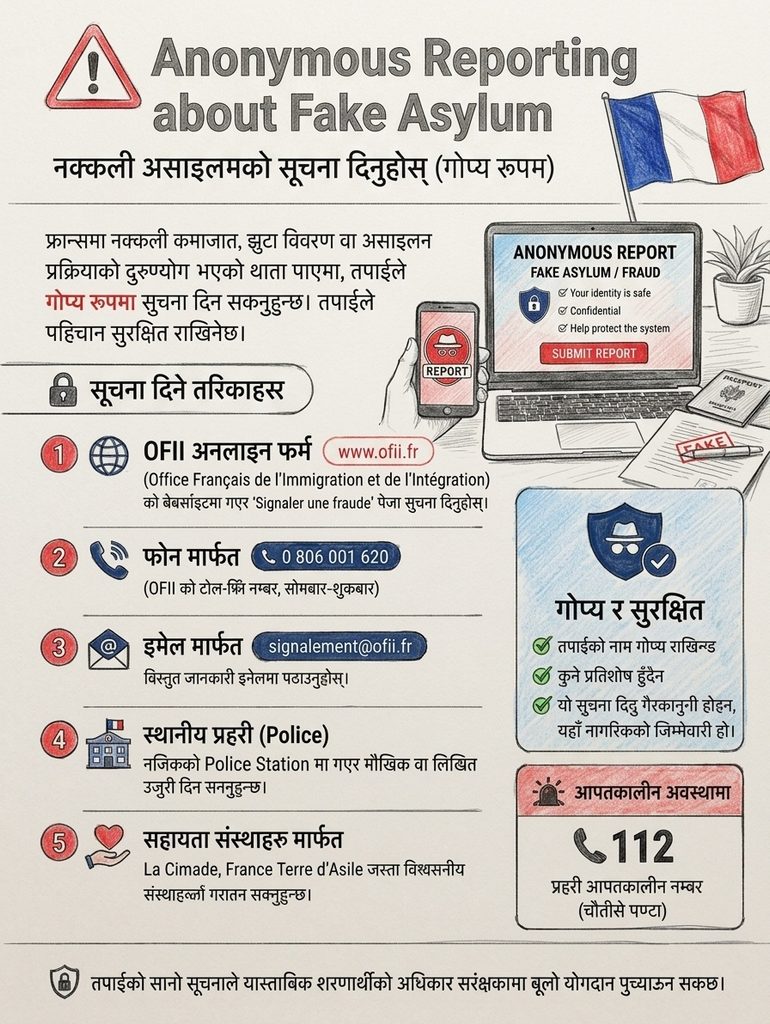
Asylum exists to save lives. When organized fraud is observed, reporting it protects the integrity of the system. European authorities generally protect the identity of good-faith tipsters.
In France
- Anonymous tips can be submitted to OFPRA.
- Local Prefecture or police fraud hotlines handle residence-permit and document-forgery issues.
- The EU Anti-Fraud Office (OLAF) can be contacted for broader cross-border patterns.
From Nepal
- Alerts to the Ministry of Home Affairs, Ministry of Foreign Affairs, or the Nepali Embassy in Paris.
- Diplomatic engagement that encourages rigorous scrutiny of claims while affirming Nepal’s status as a safe country of origin.
Useful evidence includes: screenshots of social media showing normal life in Nepal, proof of business ownership or employment, travel records, family photos, or government employment documents that contradict persecution claims. Tips can be submitted anonymously through online portals or by mail without personal details.
Legal and Sustainable Pathways for Nepalis
For those seeking better opportunities, legal routes remain the safest and most sustainable choice:
- Higher education and student visas
- Skilled-worker and talent visas
- Seasonal and temporary work programs
- Entrepreneurship and investment pathways where available
Shortcuts through false asylum claims carry serious personal risks: debt, possible criminal records, removal orders, and long-term bans from the Schengen area. Honest migration builds lasting respect; deception breeds suspicion.
Preserving the Integrity of Asylum Benefits Everyone
Asylum is a noble humanitarian instrument born from the tragedies of war and persecution. When it is treated as a commodity, the protection it offers to the truly vulnerable is weakened. Genuine refugees wait longer, public support declines, and entire communities suffer reputational damage.
Nepal’s government can strengthen its position by clearly communicating that the country is safe for its citizens and by cooperating on the return of unfounded claims. At the individual level, integrity matters. Choosing legal pathways protects both personal futures and the collective dignity of the Nepali diaspora.
In the end, a credible asylum system serves everyone: real refugees receive faster help, migrant communities maintain respect, and host societies remain willing to extend protection where it is genuinely needed.
Hashtags
#FakeAsylumClaims #NepaliAsylumSeekers #AsylumFraudFrance #OFPRA #HumanTrafficking #RefugeeProtection #NepalDiaspora #AsylumSystemAbuse #GenuineRefugees #ImmigrationFraud #LegalMigration #NepalToFrance #AsylumCoaching #DocumentFraud #ProtectAsylumSystem #NepaliMigrants #RefugeeCrisis #FranceImmigration #EconomicMigration #StopAsylumFraud #AsylumIntegrity #NepalImageAbroad #ReportFraud #SafePathways #HumanitarianSystem #MigrantReputation #SchengenBanRisk #HonestMigration