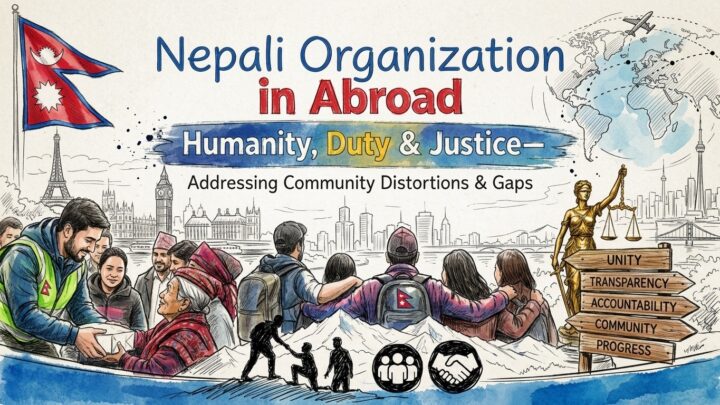
The Nepali community in Europe has been developing as an active community connected, directly or indirectly, especially with the immigration and refugee system. It is estimated that the number of Nepalis in Europe has reached around the hundreds of thousands, although official statistics may differ from country to country.
The main role of Nepali associations, community groups and social organizations abroad should be to provide correct information and necessary support to newly arriving Nepalis regarding housing, employment, language learning and legal processes; to preserve and promote the Nepali language, culture and festivals; and to help Nepalis who have come to Europe through valid student, worker or business visas to move forward according to their legal status.
Abroad, things are hardly as easy as in Nepal. Everyone has to work in order to survive. When Nepalis come abroad and live a robot-like life doing daily work, after some time they may feel that their own existence is disappearing. In Nepal there are things such as honor and closeness in the community and neighborhood. When they do not find that closeness and social identity abroad, they begin trying to search for their own existence. In the process of searching for identity and existence out of that robot-like life, a tendency to form various groups and organizations appears to have increased.
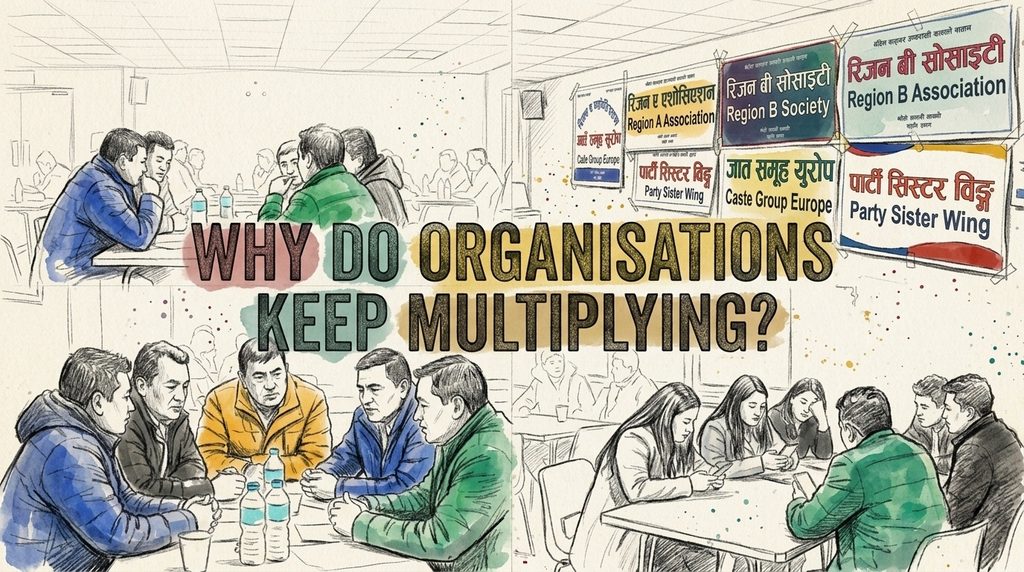
The tendency to open fraternal organizations of Nepal’s own political parties abroad, and to establish small organizations in the name of various castes and ethnic groups, has increased. The practice of opening organizations in the names of various castes and ethnicities, regions and political ideologies has also increased. Some organizations collect donations and support from members saying it is for entertainment, song and dance, and cultural programs. A practice of connecting even newly arrived Nepalis to such organizations and collecting financial support is also seen.
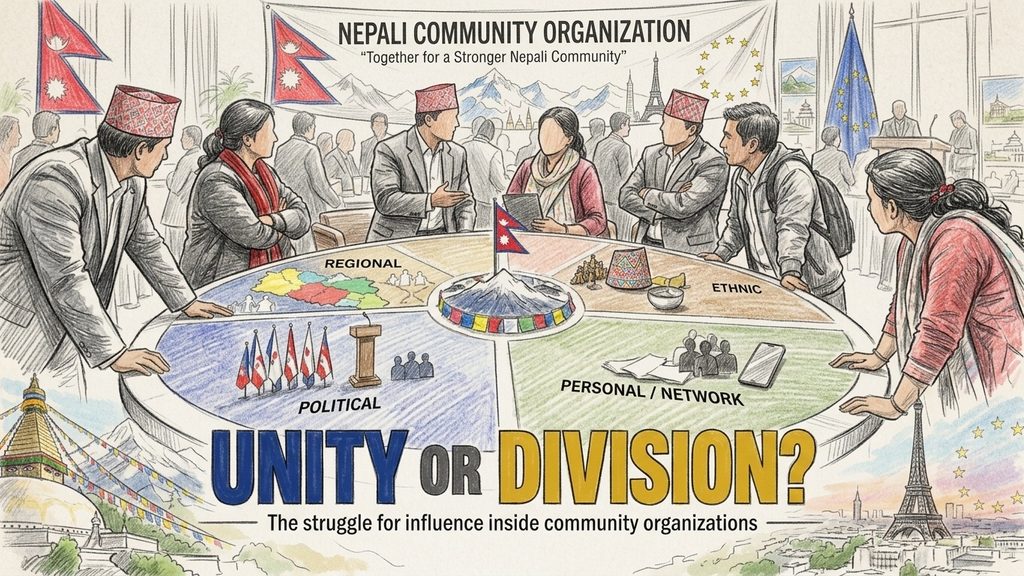
Another purpose of opening organizations is the tendency to show one’s influence and status with the mentality of “we came first,” saying that they themselves already entered abroad earlier or have already become established. Instead of bringing unity to the Nepali community, this has increased the risk of creating division, syndicates and factionalism. Even in an organization that has only 20–25 people, tug-of-war over who will sit in which post is seen a great deal on social media.
In some situations, the organization appears to have become a medium for establishing one’s own influence, access and personal status rather than for community service and unity. People in organizations have turned the spirit of the organization into a medium for earning economic benefit. The tendency to use organizations created in the name of community unity, support and preservation of Nepali culture for personal interest and financial gain appears to have weakened the real purpose of the organization itself.
When opening any organization abroad, it must be operated in full compliance with the law of the concerned country. But in the name of the Nepali community, some organizations in Europe, in the name of rights and interests, help evade the law of the concerned country, help prepare false documents for fake asylum (refugee) claims, and teach how to become a false refugee. The work shown to that country’s government is one thing, but the work done internally is another. Even though transparency and social service are spoken of outwardly, in practice personal interest, factionalism and internally self-interested activities are going on.
The Dark Deeds and Distortions of the So-Called Brokers Who Run Organizations
Looking at social media, there is no one as great as they are. They keep posting photos and statuses of having donated 100–200 euros to two or four victims, of having arranged a job for someone, or of having found a room when someone needed one, as if they themselves have taken the contract for the entire pretension. From the outside, there is hardly anyone as good and as much a social worker as they are. Moreover, they also keep access around non-governmental organizations or diplomatic missions (embassies). In most cases, those who are staying after doing fake asylum themselves are in the majority.
It is said, of course, that organizations were opened for the rights and interests of Nepalis. But their inner business is something else. Wearing the cover of a social organization, putting on a drama of social service on social media, a gang is formed, in which they carry out activities including brokering, human trafficking, as well as illegal work such as money laundering and hundi.
They are even skilled at protecting people who went after committing fraud from Nepal, and at how to save them legally and how to shelter them. A tendency is also seen of not only working through people abroad but also making connections in Nepal itself, calling those who went after committing fraud from Nepal to go abroad, and protecting them.
By misusing the organization — that is, by showing various activities in the organization, bringing people into contact under the cover of social service, influencing the community and making one’s own connections, and on the strength of that even defrauding the Nepali community in the name of help — such work also takes place.
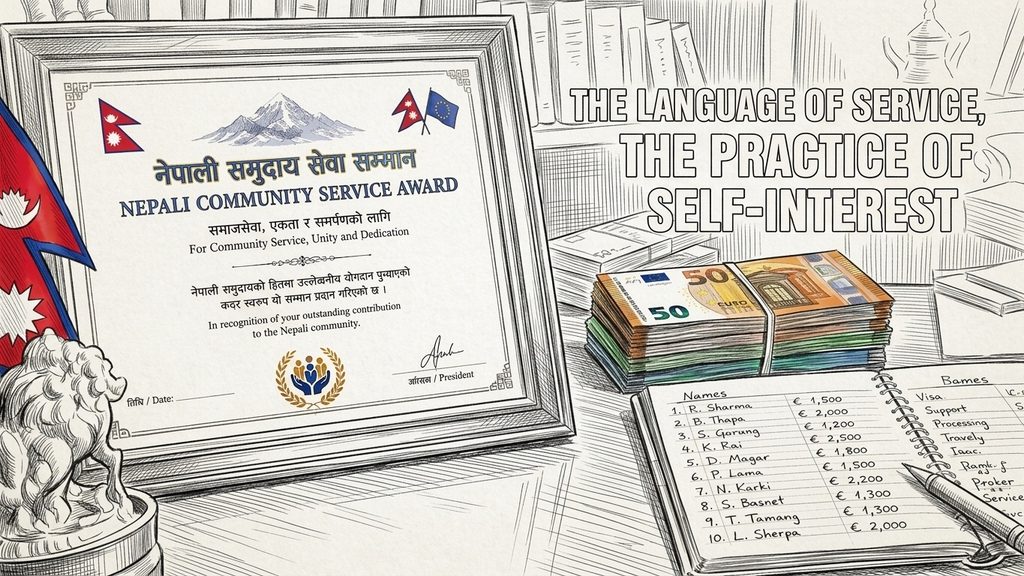
Nepali brokers have been openly encouraging asylum applications. It is seen that some people, through various organizations, gather people and give information and instructions on how to apply for asylum in Europe, how to present one’s story, and how to influence the concerned authorities.
These organizations neither help nor include anyone except their own circle and relatives known from their own village or place. Moreover, one must praise them and introduce them as social workers. And saying the organization is holding a program, they bring artists under the pretext of celebrating festivals and preserving Nepali culture so that they themselves can have fun, and forcibly collect money in the name of tickets and donations/charity. They even scold some people. They show as if they have done one or two pieces of work, and in the remaining situations the programs these organizations hold now become personally self-interested. But in the programs they hold in a self-interested way, a coercive situation is again created for other Nepalis to stand with them.
Ultimately, under the shadow of these very organizations, hundi transactions, brokering of fake immigration, and illegal activities take place.
Nepo Babies of Nepali Organizations — Family Members of Organizations Situated Abroad
Those who entered abroad a bit earlier and run organizations, even if they have had to earn by doing lower-status work abroad, when showing it on social media they dance to foreign songs with a lot of pomp, hold parties, and present themselves as if they have truly become royal.
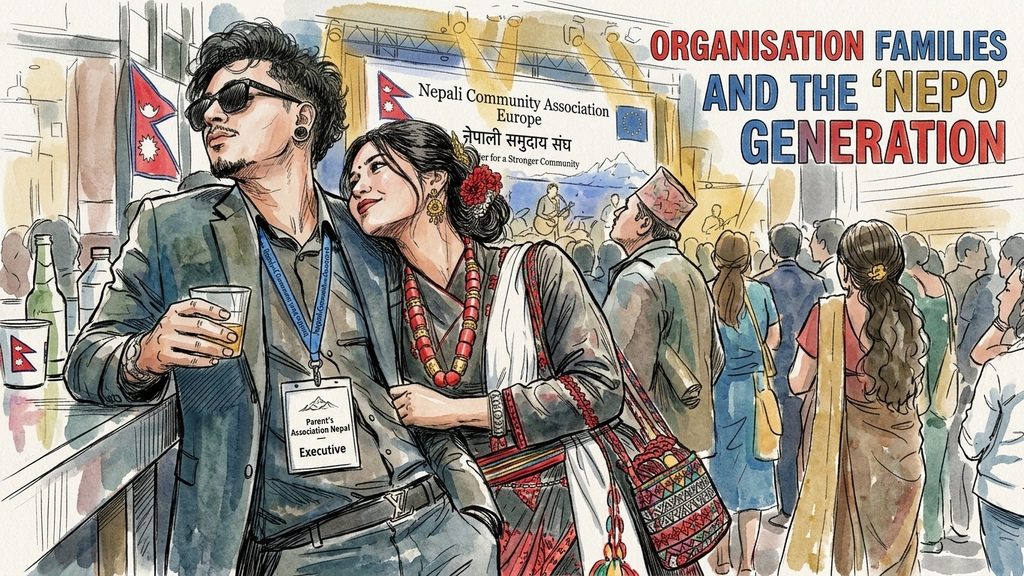
When their Nepo children go abroad, they still have to work to earn as much as those same parents earned. For such work-shirkers who want alcohol parties every day, who keep a taste for wearing expensive branded goods, and who must have sexual relations month after month with newly arrived girls, earning by working abroad is as hard as chewing iron beaten rice. They need money to cover expenses abroad, and they have neither any skill needed abroad. Those Nepo Babies have become habituated in Nepal itself to the wrong habit of running life by talking big, persuading, or cheating others.
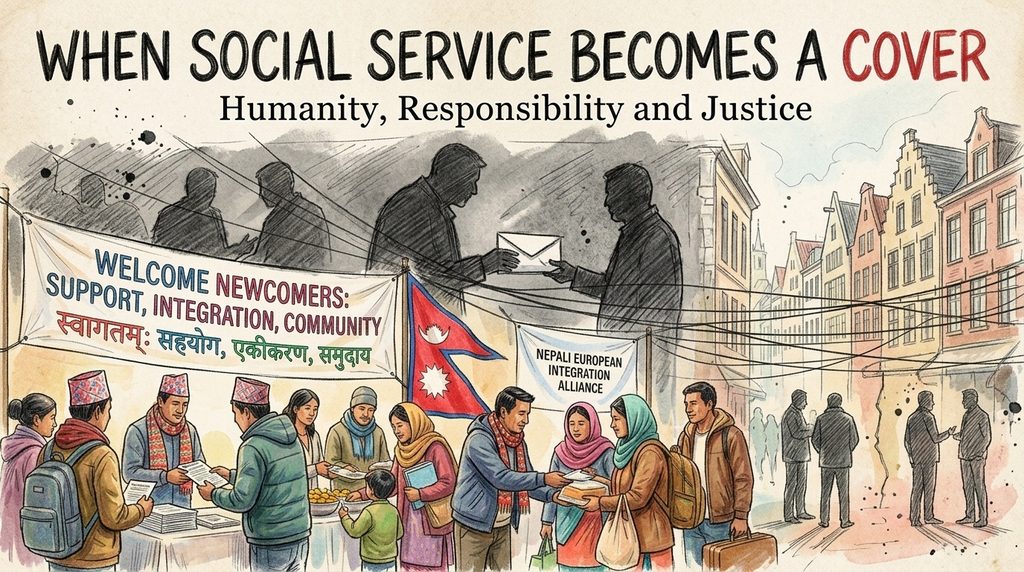
After that they adopt various tactics, falling into a slump, in order to earn. Then at programs of the organization opened by their fathers and grandfathers they wear a card and show “I have access all over abroad,” cheat newly arrived people, press women that they must become girlfriends in the name of help and sexually exploit them, and do such deeds as spending and partying on those women’s own money. Their misdeeds begin — arranging room rentals, placing people in jobs, and also doing brokering work of bringing people by “donkey” route from other European countries, taking commission, and so on. How much remuneration must be given in return is unspeakable — not only in money; accusations are heard of having to endure physical, mental and even sexual pressure. Making people even forced into sexual relations besides money in return for having helped, and if they do not agree, threatening them instead and behaving as if “if you don’t do as I say I will do anything,” has been happening.
Parents also give silent support to their children’s bad deeds. Because they did not have to do lower-status work like themselves, after all. After all, what is the organization made in the time of their own fathers and grandfathers for? It must be for the benefit of their own children — an organization received as inheritance.
Exploitation of New Nepalis, Women and Students
Because of the influence and access of so-called old-timers as well as some people staying on the basis of fake asylum, students always fall amid pressure and injustice. It is a sad matter that the influence of those who take advantage by defaming the country appears greater than the voice of students who face real challenges. Those directly hit are genuine students, who cannot even openly express their pain. Students are not allowed to work full-time, obtaining permanent residence (PR) is not easy, and even after completing college studies they have to struggle a great deal to get employment according to their education and qualifications.
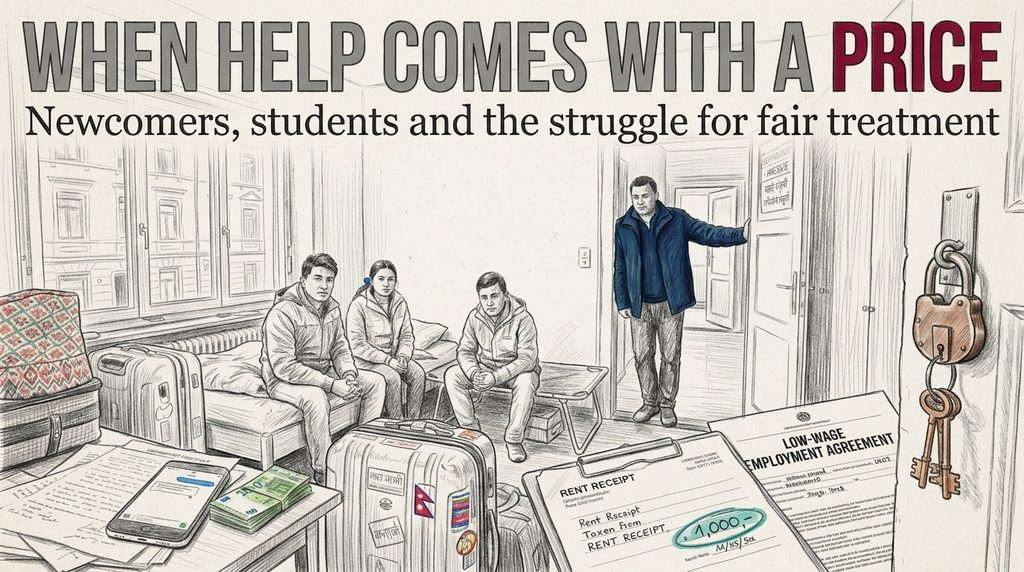
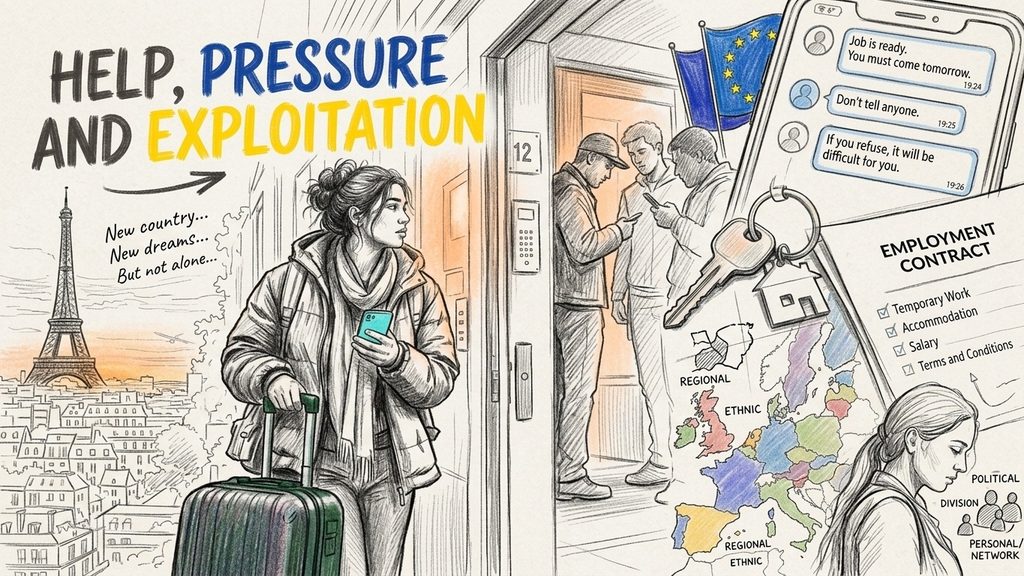
Established older Nepalis have been economically exploiting newly arrived students or workers in the name of helping them. Activities such as making them work at wages far below the prevailing market rate, putting mental pressure by saying “I gave you work and I helped you,” packing many people into a single room and charging expensive rent have been happening. Newly arrived people are often cheated after falling for temptations such as “I will arrange work,” “I will make documents,” and “I will get a card issued.”
But students are silent. Many do not even have a record with the embassy, as to how to connect students. Those same brokers dominate every program held by the embassy, and no one listens to the students’ plight.
Moreover, calling women who went abroad on visas under the pretext of getting them asylum, making them illegal, and placing a sexual proposal in the name of help is a common proposal of brokers.
For those who have no one abroad, receiving the organization’s help means giving up one’s dignity. Otherwise, hoping for the organization’s help is useless. Worse, when members of the organization itself or their own relatives suppress Nepalis, one has to face threats instead. Let alone talk of justice.
If Someone from Nepal Needs Help and Contacts an Organization
In some situations even the numbers of people in the organization cannot be obtained. And if one tries to make contact after meeting them under a banner of collecting money or selling tickets for some program, they do not even try to give the number of the concerned person, even though all are people related to that same organization. An argument is even given that there is a privacy law abroad. The laughable thing is that those who talk of rules and law themselves…
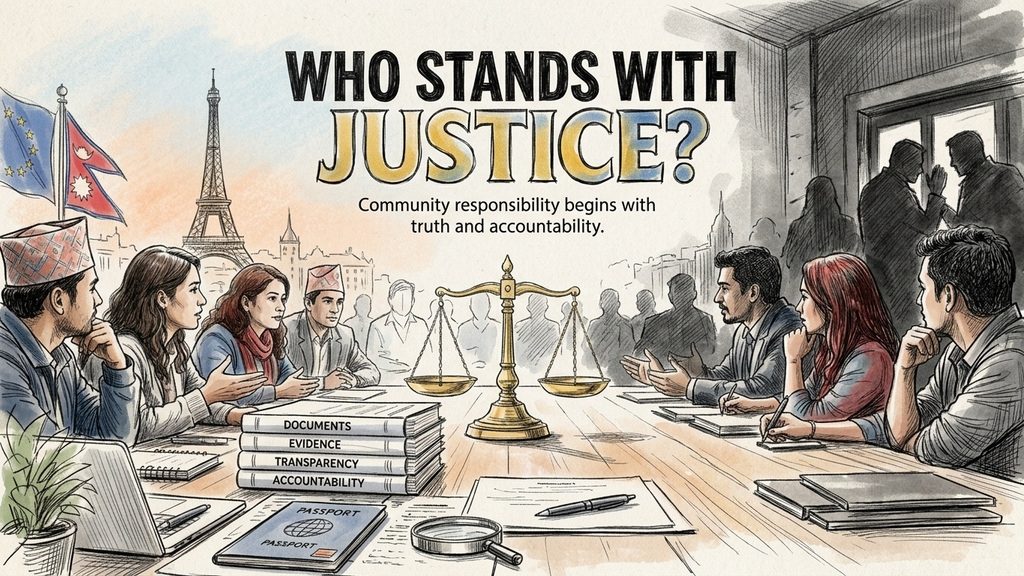
Those who talk about legal matters abroad themselves are skilled at doing fake asylum by violating that same country’s law.
When defrauding people they wear the organization’s own card and show the access of that same organization on social media. After wearing the organization’s card, those organizations later try to deflect and protect that fraudster by saying “we do not know him,” “we do not know him well,” or “he is not even a person of the organization.”
The argument is given that an organization is not the law and the court; that is well known to everyone. But in Nepali society, in some situations the very basis of justice is evaded. At least listening to both sides and arranging an atmosphere of peace and settlement does not mean one has to become a court. If an accusation has been made against a person and a victim from Nepal has contacted the concerned association or organization or its members, expecting help, with a plea — is it not a social responsibility at least to listen to both sides, to put them in contact if necessary, and to help the process of dialogue?
When a simple Nepali in Nepal asks for justice from a Nepali abroad, even while knowing the conduct of the bad person around them, a tendency is seen of taking the side of the bad person one knows and, when injustice is done to the simple Nepali, of helping on the basis of nepotism, favoritism, kinship and acquaintance. Such a culture of considering relationship greater than humanity makes society even weaker.
Should not the role of Nepali associations and organizations abroad be on the side of truth, transparency, respect for law and justice? But they sell even morality to save the wrong person.
How Do They Protect the Fraud of People Close to Them?
When talk arises of the wrongdoing of a person related to the organization or close to them, at that time suddenly everyone comes out to save and support. About those who are committing fraud while selling the name of the organization — is one allowed or not allowed to tell the official persons of the concerned organization? Even when the concerned organization is informed about wrong acts done by their own members, hangers-on and relatives, giving expressions such as “seek the legal path,” “the organization was not made for that work, is that the organization’s responsibility?,” “trying to divide Nepalis,” and not even wanting to hear both sides in order to save people of wrong tendency, is as if normal abroad. Now it is already clear to everyone how much help Nepali associations and organizations abroad give to students, Nepalis in trouble, or people who have no one with them — those who are not close to the organization, are not relatives, or do not flatter and praise them. In such a situation, what kind of expectation should students and simple Nepalis without access have from Nepali associations and organizations? Even if many people contact, even the families of people who have committed fraud do not take responsibility.
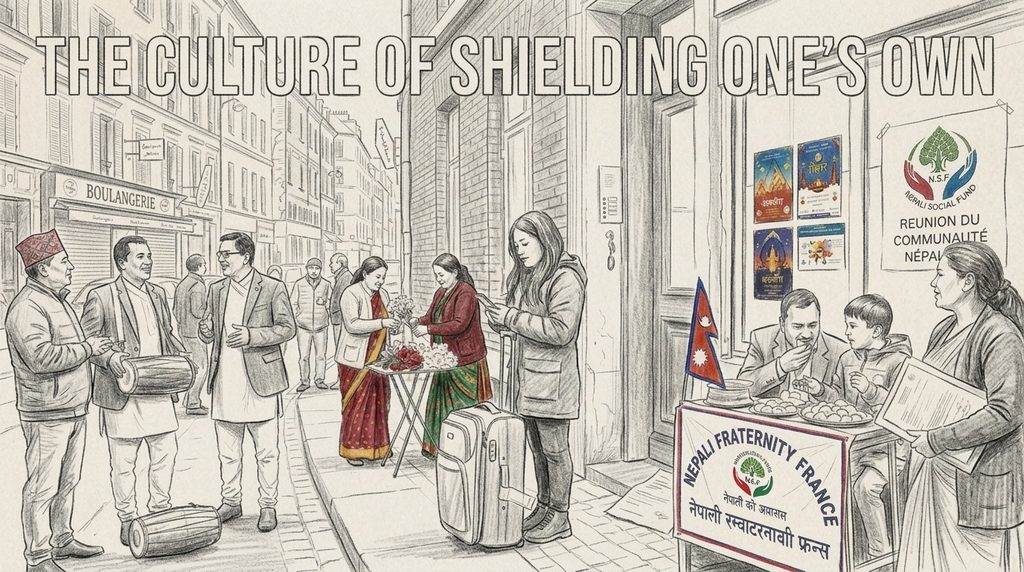
And they ask for evidence, saying give us evidence, we will help. Victims send evidence in the hope of getting justice. After that they raise the issue of the other’s privacy and instead threaten, saying “this matter must be settled right here.”
Ultimately their priority remains toward saving the guilty, even if the organization itself is defamed. All together attack the victim. At the time of cheating and giving hardship the organization is involved, the family is involved, and when the same person is caught everyone takes no responsibility.
If fraud is committed taking the name of an organization and wearing a card, is the organization responsible or not? And after there are people affiliated with the organization and after photos have been seen in the organization, people try to make contact through the organization itself. If any organization or its office-bearers try to protect only one side without even understanding the facts, does that raise a question on social accountability or not? The duty of a social organization is not to automatically save or try to protect the accused person, but to stand on the side of impartiality, truth and justice.
Conclusion
The irony is that some people in social organizations abroad have been protecting criminals in the name of humanity, promoting fake asylum by brokering in the name of help, and also running hundi transactions while giving shelter to corruption and financial irregularities. In this, clever Nepalis involved in organizations and clever Nepalis who put on the cap of social worker are themselves involved.
The entire Nepali community is not guilty. But because of the misuse of organizations by some organized groups and such wrong acts of some limited persons, there is a risk of reducing to dust the honor of both the whole Nepali community and the nation.
It is praiseworthy work for Nepalis living abroad to help one another in crisis, to give correct information to newcomers, and to stand with them in language, employment, education and social adjustment. But if someone has fled abroad after giving hardship to someone, after cheating, after other misdeeds, it does not mean justifying that, hiding it, or protecting it in the name of help.
Social service means helping a person in crisis on the basis of humanity. But social service also has a clear scope. But after leaving shame, honor and humanity behind in the country itself, what is there to talk about!
“The person who holds the ladder for a thief climbing a wall is not not a thief — he too has committed theft.”
Undoubtedly, some organizations have also given selfless help from the heart, and such organizations should be respected. But the behavior of the majority of organizations leaves room to raise questions. It would not be inappropriate even to say that some associations and organizations were opened so that it would be easy for their own people, just to run an earning-business using the organization’s name, or just to save and protect wrong people close to them. At present, in the name of personal interest, influence and showing one’s own existence, a tendency of some people, linking the organization’s name, to cheat Nepalis, take undue advantage, and be involved in various immoral activities appears to be increasing. That they adopt various methods of earning by linking the organization’s own name is known to all. Such acts negatively affect not only the organization but also the prestige of the overall Nepali community.
Hashtags
#NepaliCommunity #NepaliDiaspora #NepalisInEurope #SocialService #Accountability #Justice #Transparency #Humanity #CommunityOrganizations #MigrantRights #StopExploitation #Integrity #SpeakUp #Nepal #Europe #DiasporaVoices #SocialJustice #NoMoreSilence