
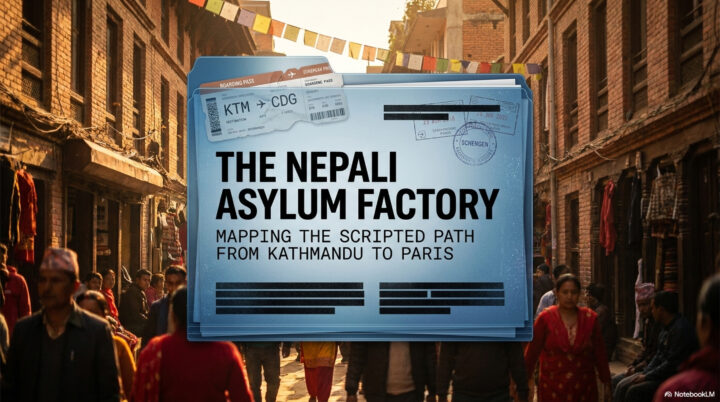
Fake Refugees, Real Fraud: How Nepali Brokers Manufacture Asylum Claims for Europe
Fabricated stories. Forged documents. A sprawling network of brokers and middlemen stretching from the alleys of Kathmandu to the streets of Paris.
Table of Contents
Every year, thousands of Nepalis leave home in search of a better life abroad. For a growing number of them, though, the road to Europe doesn’t start with a legitimate visa or a real job offer. It starts in a broker’s office in Kathmandu — with a scripted lie, a folder of forged papers, and a route mapped quietly through the back doors of Eastern Europe.
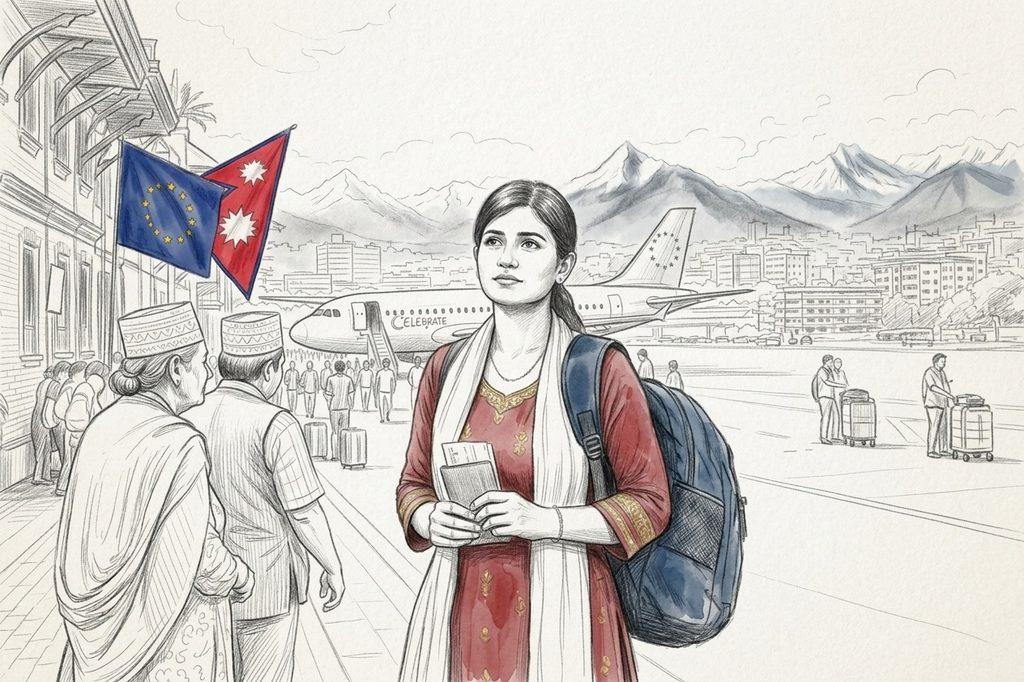
This is an inside look at how an underground industry has quietly flourished — one that coaches desperate people to enter Europe illegally and file fraudulent asylum claims in countries like France.
1. How It All Begins in Nepal
The operation starts long before anyone boards a flight.
- In Kathmandu, a web of agents — many linked to Nepalis already settled in France and other European cities — actively recruits people chasing overseas opportunities.
- Their pitch is simple: a Seasonal Visa, sold as an easier entry point than the tourist visa route, which demands bank guarantees and heavy documentation.
- But the deception runs deeper. By the time a recruit boards the plane, many have already been handed a fabricated asylum case — complete with fake papers, a rehearsed backstory, and precise instructions on what to say if questioned at the border.
- Brokers don’t just sell a ticket. They run a full-service operation: coaching on how to enter, who to contact on arrival, how to navigate immigration systems, and how to game the law once inside.
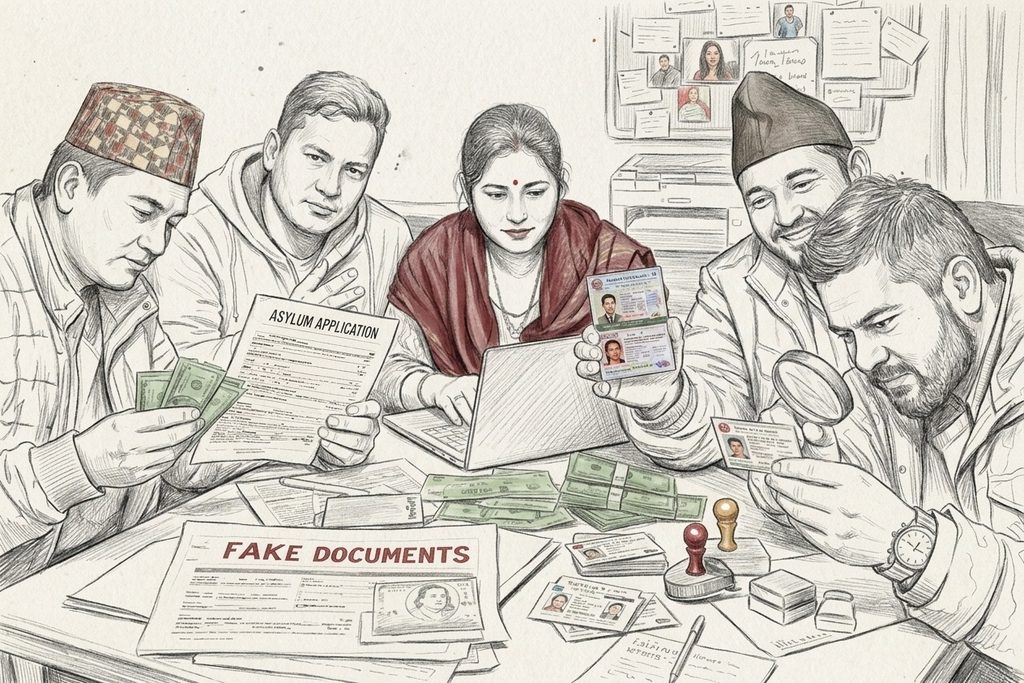
“A gang/racket that creates fake documents for the purpose of filing asylum.”
2. The Route: From Eastern Europe to France
The journey is carefully engineered, step by step.
- Recruits are usually routed first through countries like Croatia, Austria, Romania, or Poland, entering on seasonal work permits or visitor visas — these are the doorways into the Schengen zone.
- Once inside, the goal is to disappear into Western Europe. Local brokers in these transit countries charge an extra €600–900 to arrange covert road transport — by taxi, bus, or private car — onward to France, Germany, Spain, or Italy.
- On arrival, passports vanish. Some applicants are told to hide them; others are instructed to destroy them outright, making nationality difficult to verify quickly.
- With no documents and a rehearsed story of persecution ready, the applicant walks into an immigration office and files for asylum.
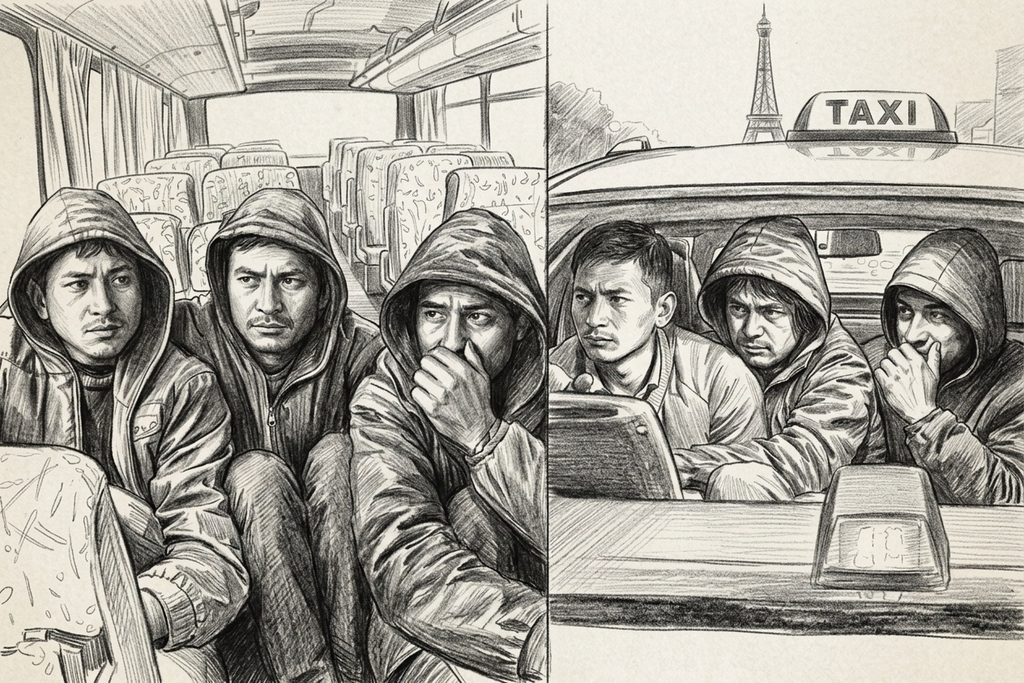
“The process of transporting someone to Paris by road for 800–900 Euros.”
3. The Forgers: A Document Factory Spanning Two Continents
At the core of the operation is a sophisticated forgery network, with documents manufactured both in Nepal and in European cities like Paris.
The logic behind it is cynical but effective: Nepal’s local government offices largely lack unified digital records, making it hard for foreign immigration officers to quickly verify whether a document is genuine. That bureaucratic gap is deliberately exploited.
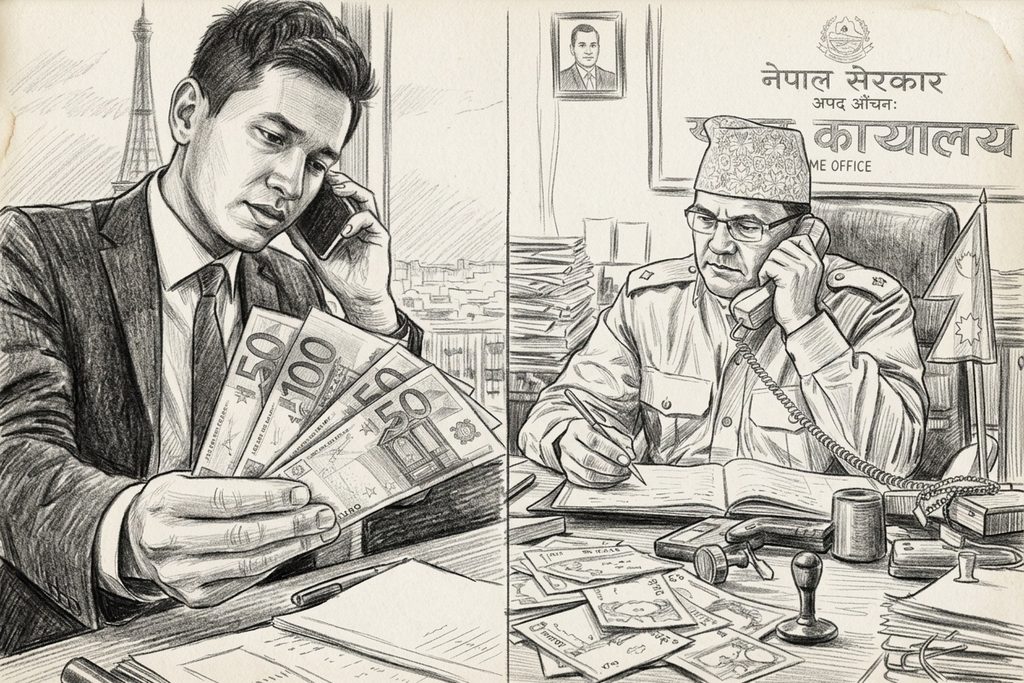
“To obtain the documents required to become a fake refugee from various government offices and organizations in Nepal.”
Common fabricated documents include:
- Threat letters — allegedly from Maoists or political groups demanding money or making death threats
- Fake extortion receipts claiming demands for “donations”
- False police complaints or arrest warrants
- Forged hospital medical reports showing injuries from alleged beatings
- Fake newspaper clippings created to mislead foreign officials
- Fabricated divorce certificates, even for couples still married
- Police reports alleging caste-based discrimination or religious persecution
- Old photos from Nepal, repackaged as “evidence” of violence or threats
- Fake recommendation letters from municipality or ward offices
In some of the most brazen cases, individuals with Mongolian features are coached in basic Tibetan phrases and instructed to apply as Tibetan refugees — a startling form of identity fraud.
4. Digital Erasure: Hiding the Real Life Online
Before filing for asylum, applicants are coached to scrub their entire digital footprint, since immigration authorities sometimes cross-check social media against the claimed history.
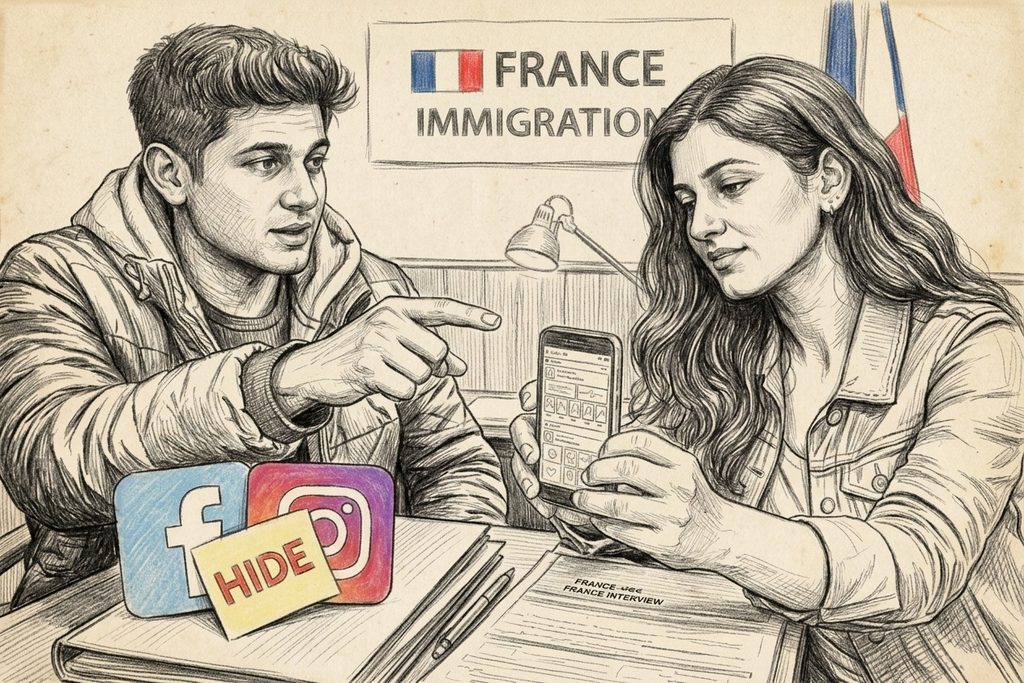
“Instructing someone to make social media photos and videos private, and requiring them to change their account name to create a new identity.”
The cleanup is thorough:
- Photos showing an ordinary, happy life in Nepal are deleted
- Posts showing involvement with Nepali political parties are removed
- Family celebrations, festivals, and weddings — every trace of a normal life — are wiped
- Old accounts are deleted entirely; new ones are created under different names
- The new profiles are curated to tell one story only: fear, victimhood, and persecution
The goal is simple — if an officer searches the applicant online, they should find nothing that contradicts the fabricated narrative.
5. The Interview: Rehearsing a Lie for Months
The asylum interview is the make-or-break moment, and Paris-based brokers prepare clients for it like actors rehearsing for opening night — sometimes for two to three months.
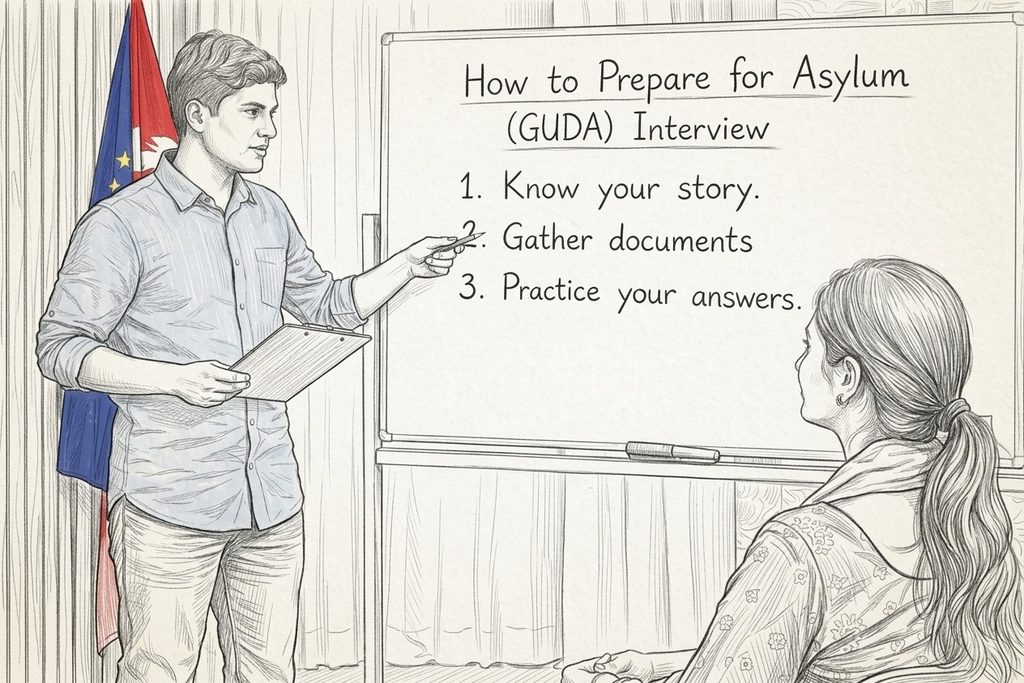
“The process of creating a fake story for asylum and coaching someone on how to present that story.”
Coaching sessions, often run by established diaspora members who have turned it into a primary income source, focus on three areas:
- Story Construction — Applicants are told exactly which political party or armed group to name as their persecutor, which region the “threat” supposedly came from, and how to sequence the events. Nothing is improvised; everything is memorized.
- Mock Interviews — Likely questions from immigration officers are anticipated and drilled, with rehearsed answers repeated until there’s no hesitation or contradiction.
- Emotional Performance — Applicants are coached on when to appear frightened, when to show distress, even when to cry — a full emotional script designed to maximize sympathy.
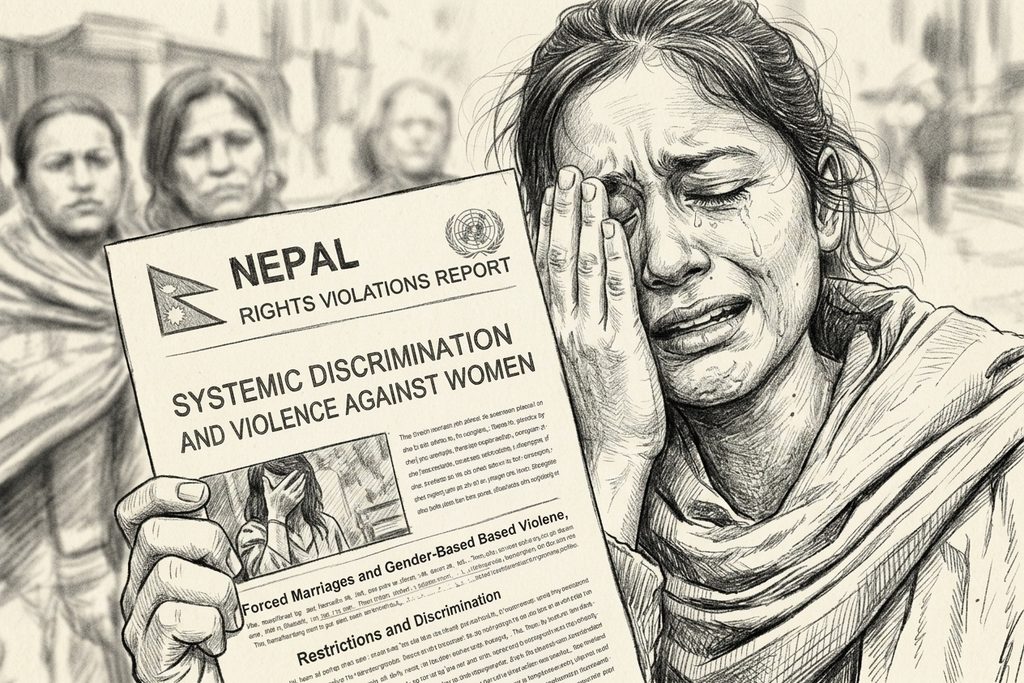
“The art of presenting a fictional story of persecution to influence an interview.”
The most common fabricated storylines involve:
- Maoist or political groups threatening death or demanding extortion
- Police harassment through false cases filed by corrupt officers
- Caste, gender, or religious discrimination
As one account chillingly put it: “To become a refugee, the most important thing you need to know is how to lie well.”
6. Why France? The Benefits Driving the Fraud
For applicants whose claims succeed, France offers a package of benefits that makes it a top target for those gaming the system:
- Residence — A 10-year “Carte de Résident,” with full work authorization
- Family Reunification — The right to bring a spouse and children under 18 to France
- Financial Support — Housing allowances and child benefits through the CAF system
- Travel — A “Titre de Voyage” (travel document) valid for every country except one’s country of origin
7. The Loophole: Sneaking Home While “Unsafe”
Here lies the glaring contradiction at the heart of the fraud: asylum status rests on the claim that returning home is dangerous, and the refugee travel document explicitly bars travel to the country of origin.
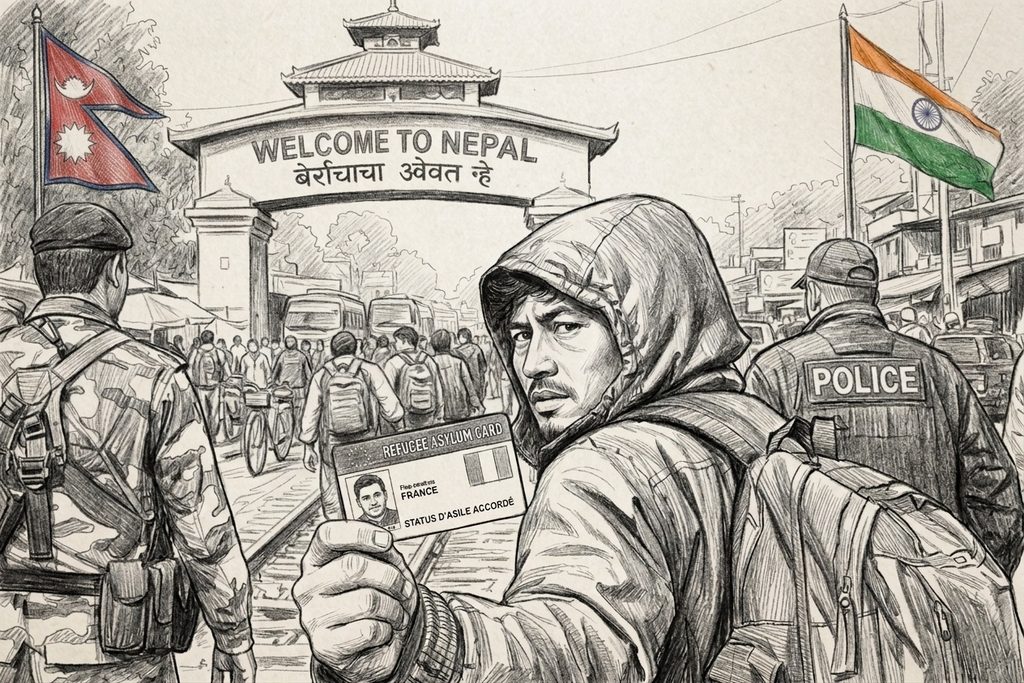
“Ways to enter Nepal via India after obtaining a refugee card.”
Yet some manage to slip through anyway — flying from France to Delhi or Mumbai, crossing into Nepal through the open Indo-Nepal border, visiting home, and returning, all while keeping up the pretense of being a persecuted refugee.
To avoid detection, phones are switched off inside Nepal, no photos are posted publicly, and every trace of the visit is carefully hidden.
8. When Asylum Fails: The Backup Plans
A rejected application rarely ends the journey. Most rejected applicants have no intention of returning home voluntarily, and brokers prepare a fallback plan for that too:
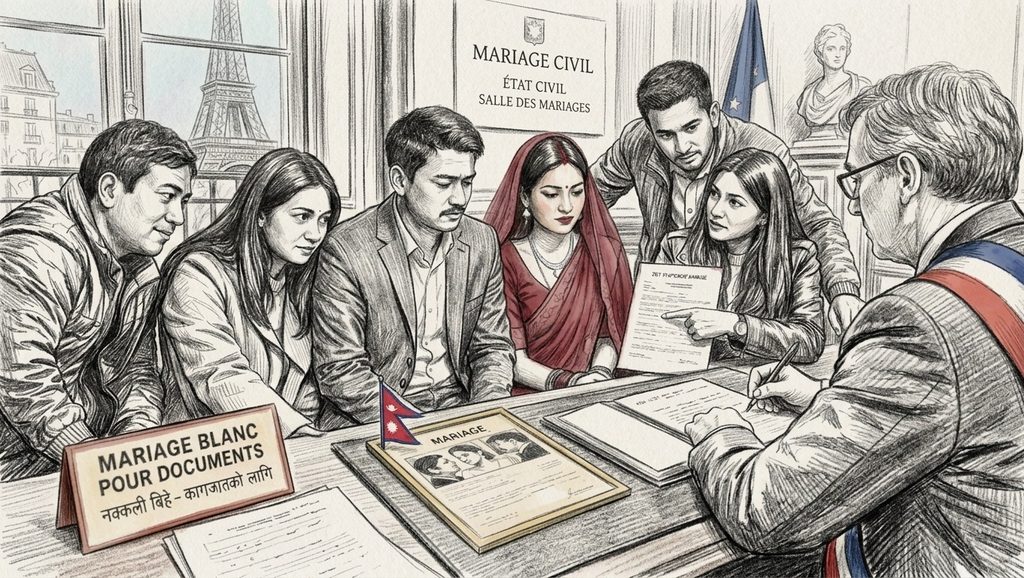
“Groups that arrange sham marriages / The act of entering into a fake marriage to stay in France after an asylum rejection.”
- Paper Marriages — Paying brokers heavily to arrange a sham marriage with a French citizen or permanent resident, using family reunification as a backdoor to residency
- Going Underground — Since deportation rarely happens immediately after rejection, many simply disappear, living and working undocumented while the legal process drags on
- Re-application — After a few years, or armed with newly fabricated “evidence,” a fresh asylum claim is filed
- Legal Appeals — Appeals to higher courts, less about winning the case and more about extending the legal right to stay
The Real Cost
This is a system built on deception, but it doesn’t just deceive governments. It causes real, lasting harm:
- Genuine refugees fleeing real persecution find their credibility undermined by a flood of fabricated claims
- European asylum systems are strained by cases that were never legitimate to begin with
- The Nepalis caught up in it are often trapped in a cycle of debt, deception, and legal limbo — paying brokers large sums for a fraudulent identity they must now maintain indefinitely
Understanding how this racket operates is the first step toward protecting genuine asylum seekers, holding brokers accountable, and helping the diaspora communities being exploited by their own countrymen.
HASHTAGS
#NepaliDiaspora #AsylumFraud #IllegalMigration #DunkiRoute #NepalToEurope #MigrantExploitation #ForgedDocuments #FranceAsylum #HumanSmuggling #InvestigativeJournalism #NepaliNews #EuropeMigration #RefugeeSystem #DunkiRoute #OQTF #FauxRefugiés #FauxAsile #FakeAsylum #FakeRefugee #StopFakeAsylum #ReportFakeAsylum #AsylumFraud #ProtectRealRefugees #EndMassMigration
(Note: the images used in this piece are AI-generated, for illustrative purposes only.)