
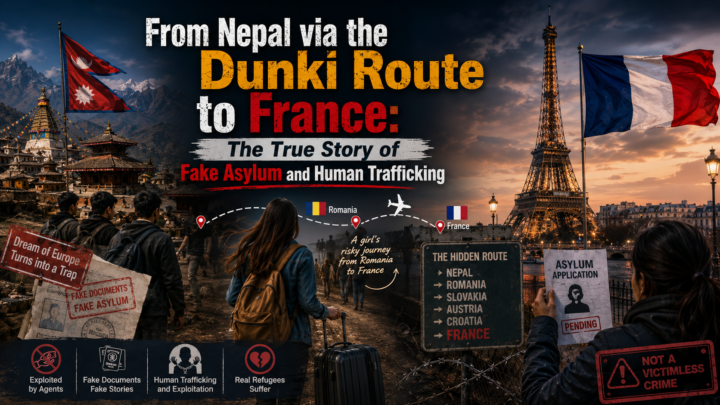
Introduction: A Journey from Nepal via Romania Through the Dunki Route to France
An ordinary young woman from a family in the Terai-Madhes region came to Kathmandu in search of a better life, like many other young Nepalis. She found work at a fancy shop; the pay was modest, but life was going along reasonably well.
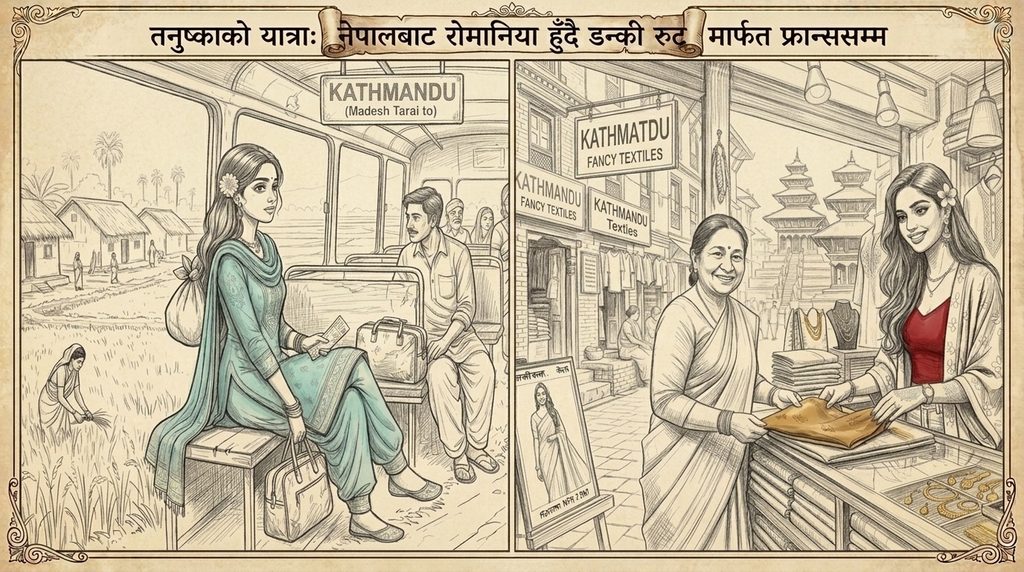
In 2023, in order to repay a family debt, she went to Romania on a work visa. Although Romania is a member of the European Union, it lies outside the Schengen Area — and for this very reason, the country has become a “transit point” for those seeking to enter the Schengen Area illegally.
What Is the Dunki Route? How Does the Journey Process Work?
After arriving in Romania, the young woman came into contact with an organized human-trafficking group and decided to go to France via the “Dunki route.” Some of her friends, who had grown up together with her in the Madhes region of Nepal and were also living in Romania, hesitated to go to Paris and are still working in Romania on extended visas.

In 2024, with the help of an organized network, she used the Dunki route to reach Paris — this same network arranged every step, gave instructions, and prepared fake documents.
After reaching Paris, she stayed at the home of a member of the network — a woman who had entered France some time earlier and was active in the local Nepali community. That same house was used as a center for making fake documents, teaching false stories, and advancing the asylum process. Other young women also lived there as tenants, similarly filing fake asylum claims while waiting for their cards.
This network mainly carried out four tasks:
- Preparing fabricated asylum documents
- Teaching how to exploit loopholes in France’s immigration law
- Managing illegal routes through various European countries to reach France
- Recruiting new people via TikTok and other social media
The Meaning and Background of the Word “Dunki”
The word “Dunki,” which originated in Pakistan, has now spread across South Asia. It means a journey made through illegal routes, passing from one country to the next, until reaching the final destination. This story is not one of ordinary foreign employment; it is deeply connected to fake documents, fabricated stories, and human-trafficking networks.

Fake Asylum Claims: Abuse of France’s Asylum Law
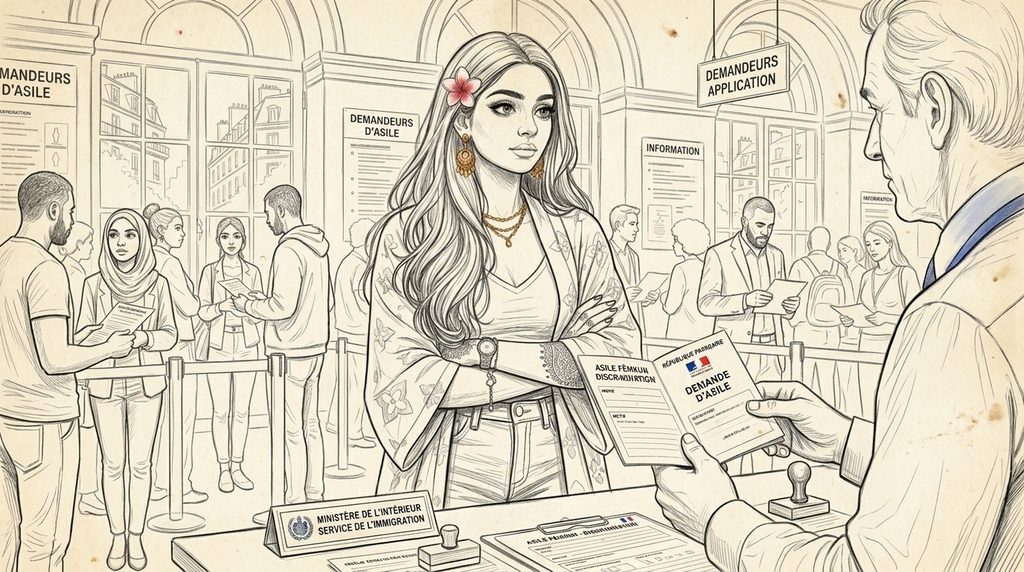
According to available information, the young woman filed an asylum claim in France on the grounds of “female discrimination.” Under France’s asylum law, those who are victims of gender discrimination or violence are granted asylum — and it appears the network turned this very legal provision into its weapon.

In reality, this was not a claim of discrimination against women — it was economic hardship. A lack of money and a weak passport pushed these people toward Europe, not any genuine persecution or risk. France granted her a four-year refugee card — including health care, the right to work, and legal residency.
She currently works at a parlor owned by an Indian proprietor and is waiting for her travel card. From the outside, this may look like a success story, but from the inside, it is an abuse of the system and a crime.
Promotion and Recruitment on TikTok: How Social Media Is Becoming a Weapon
This network is now teaching, on TikTok, “how to claim asylum in France,” while displaying refugee cards. Because the French government’s monitoring of TikTok is limited, groups involved in human trafficking are using this platform openly.

On Facebook and Instagram, however, photos that would reveal their identity are not posted, because of the legal risk. This network also calls Nepalis living in other European countries to France, arranges fake asylum for them, puts them to work, and collects a commission in return.
Other women who entered France in 2025 have also organized within this same network, running the business of fraud and brokering in an increasingly consolidated and systematic way.
Income from the parlor continues to go toward repaying the debt taken on to come to Europe, but the spending and luxuries of life in Paris are funded by money that comes through association with the human-trafficking gang — through brokering and by bringing in new people. Friends left behind in Romania are occasionally shown pictures of a luxurious life — shopping, parties, and events — which encourages others to choose the same path.
Why Is the Dunki Route a Cause for Concern?
1. Risk of Illegal Migration
The Dunki route is extremely dangerous and treacherous. Walking this path means putting one’s very life at risk.
- Middlemen charge large sums per person — and once they have taken the money, they may disappear.
- Anyone caught in Europe’s border areas is detained, deported, and risks being denied visas in the future.
- The Government of Nepal has no record of citizens who have gone through these illegal routes — so if any accident occurs, the government remains unaware.
2. Abuse of the Asylum System
The asylum system was built worldwide to protect persecuted people, victims of war, and those genuinely at risk. Abuse of this system has a deep negative impact.
- False claims slow down and complicate the asylum process — making it harder for genuine victims to receive timely help.
- Because of fake claims, European countries are tightening asylum laws further, which also affects genuine refugees.
- It damages the trust and reputation of the Nepali community — even those going on student and tourist visas are increasingly viewed with suspicion, and visa approval rates are declining.
3. The Trap of Human Trafficking
This journey initially looks like an “opportunity” — but in the end, a person falls into a trap from which it becomes extremely difficult to escape.
- The network first offers “help” — arranging travel, documents, and housing. Then it demands payment — money, labor, or bringing in others.
- Many young women face the risk of sexual exploitation — both during the journey and after reaching the destination country.
- Once caught in the network, people are afraid to go to the police — because their own asylum claim was false, and they fear legal consequences.
- Ultimately, the victim is forced to become part of the trafficking network itself — recruiting others, preparing documents, and showing the way.
4. Impact on Nepal’s Image and on Legal Migration
Such incidents seriously affect the international image of Nepal and the Nepali community — a cost that legitimate and honest Nepalis end up paying.
- European embassies have begun tightening scrutiny of Nepali visa applications.
- The credibility of Nepali workers in the international labor market is weakening.
- The likelihood of visas being rejected for genuine students or professionals is increasing.
- The Government of Nepal has to face criticism on international platforms.
- In the long run, legitimate opportunities for foreign employment, education, and business are declining.
The Legal Perspective of Nepal and France
In Nepal, human trafficking and smuggling are serious criminal offenses. Anyone who assists such networks, directly or indirectly, is also subject to legal action.

In France, under the Penal Code (Code Pénal) and immigration law, making a false asylum claim is a serious crime — in such cases, asylum can be revoked and deportation can follow. Using forged documents, obtaining asylum through false declarations, and operating a trafficking network are criminal acts. Assisting illegal migration for financial gain is considered an even more serious crime. Those who “show the way” via TikTok or other social media can also be held guilty under the same law, and those who make use of trafficking services are also subject to legal liability.
Conclusion: This Is a Modern Form of Human Trafficking
To put it plainly — this is a modern form of human trafficking. The old form of trafficking was based on force. The new trafficking, however, happens through dreams, through social media, and through “success stories.”
This story shows us a complex truth — the very young women who initially appear to be victims later become active parts of the network itself. Such gangs run a business of earning money by teaching others illegal routes — this is clearly a crime. As a conscientious citizen, it is necessary to file complaints against such gangs with the relevant authorities.
To dream is not wrong — but only through a legitimate and safe path.
This is an investigative article. To maintain confidentiality, no real or fictional name of any individual has been mentioned in it, and some details have been changed. Its purpose is solely to raise awareness about this new form of human trafficking.
Hashtags
#DunkiRoute #HumanTrafficking #Nepal #France #Refugee #FakeAsylum #IllegalMigration #NepaliDiaspora #SchengenVisa #SocialAwareness