
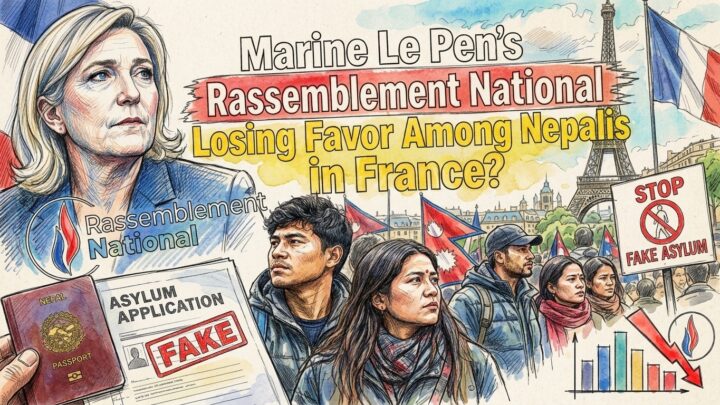
Immigration Set to Dominate France’s 2027 Debate
Immigration and asylum policy look set to become an even bigger political battleground in France over the coming years. The Rassemblement National (RN), led by Marine Le Pen, has kept its hardline stance on immigration constantly in the public eye. As the 2027 French presidential election draws closer, issues like undocumented residency, border control, and the alleged misuse of the asylum system are only likely to grow more sensitive.

RN’s Proposed Immigration Policies
As it positions itself for the 2027 race, RN has put forward a set of policies, including:

- Stopping illegal immigration
- Tightening the asylum system
- Restricting family reunification
- Applying “national priority” to social benefits
- Holding a referendum on immigration policy
The Legal Asylum Framework — and an Alleged Loophole

Under EU and international law, genuine protection is granted to people who meet specific criteria — those facing real persecution or serious danger, those fleeing war-torn regions, and those who have suffered political or social repression. But recent public debate has raised allegations that some individuals enter Europe on seasonal visas to countries such as Greece or Austria, then travel onward to France and file asylum claims built on fabricated details or falsified documents.
Allegations Circulating Within the Nepali Community
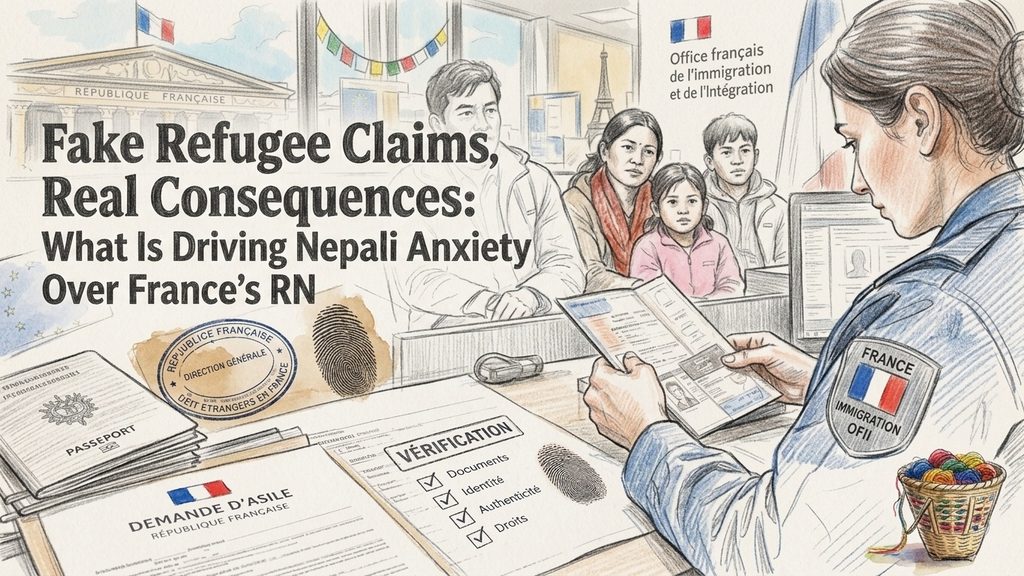
Within diaspora circles — unproven and contested as it remains — there is talk that certain networks coach applicants to construct fabricated stories of caste-based discrimination, gender-based violence, or political persecution in Nepal, or to falsely claim a Tibetan refugee identity, on the belief that acceptance rates run comparatively higher for certain categories. Some lawyers in Nepal have likewise suggested that a large share of such claims may be fabricated. These claims and figures remain disputed and unproven, but if false documents and fabricated statements are genuinely being used in an organized way, that deserves a fact-based, independent inquiry — not dismissal or neglect.
A Telling Incident — and the Fear Behind It
When Emmanuel Grégoire was elected Paris’s new mayor, some Nepalis reportedly celebrated even though they hadn’t voted — the reasoning being that where scrutiny is weak, a fabricated story can still secure a refugee card. RN provokes the exact opposite fear: if France’s immigration authorities were to coordinate with the Nepali embassy to verify submitted documents, many files could turn up birth records, addresses, old passports, and Nepal-issued citizenship papers that don’t match the story on file. Claims built around a Tibetan refugee identity could unravel under the same scrutiny. It is this fear of exposure — more than any hostility toward Nepalis as a people — that appears to be the real source of unease around RN. The party is widely seen as targeting the fake-identity industry, not any particular nationality.
Not Just an Immigration Issue — a Fraud Issue Too
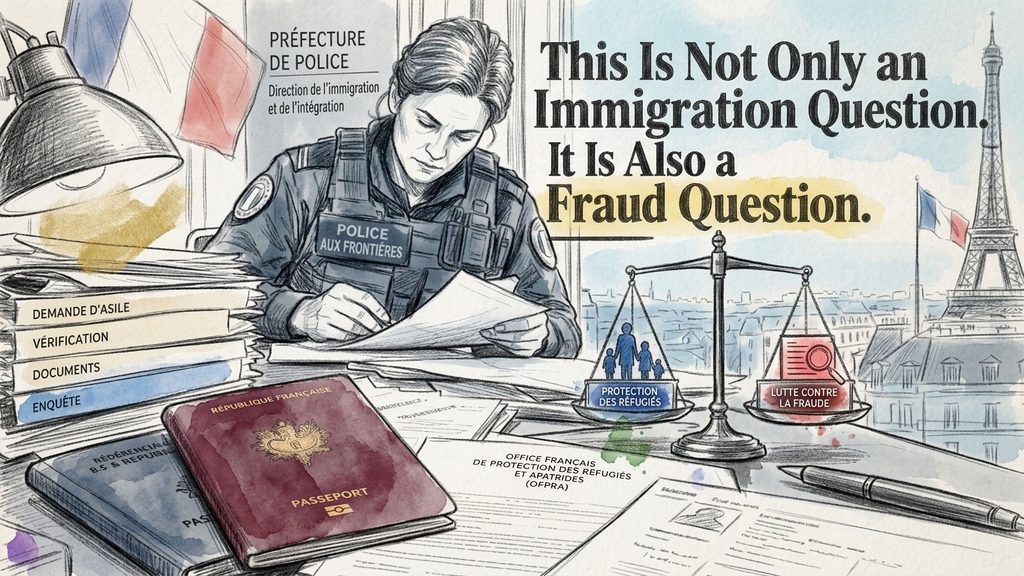
This isn’t only a question of immigration; it’s also a question of people committing fraud under the cover of asylum claims. Asylum obtained on false pretenses doesn’t just push genuine victims aside — it also risks opening a route into Europe for people implicated in financial crimes back in Nepal, such as cooperative fraud or money laundering, and even for fugitives. There is ongoing talk within Nepali society that some such cases have used exactly this route to reach Europe. That pressure to emigrate has only intensified since the 2025 Gen-Z movement, amid growing frustration among young people and mounting pressure to seek opportunities abroad.
Some of the stories presented to French asylum authorities reportedly follow a familiar pattern: fleeing Tibet directly, losing one’s documents, or having them seized by a broker. Yet questions have been raised over whether such applicants’ actual birth, education, employment, and visa history in fact trace back to Nepal or India. Because claims tied to Tibetan identity are believed to see comparatively higher acceptance rates in parts of Europe, some networks are alleged to steer applicants toward this route — though this, too, remains an allegation requiring independent verification, not an established fact. If false statements and fabricated documents are indeed being used in an organized way, a fair and impartial investigation is warranted.
“France Is for Those Who Love France” — Not Only for Those Who Take Its Benefits
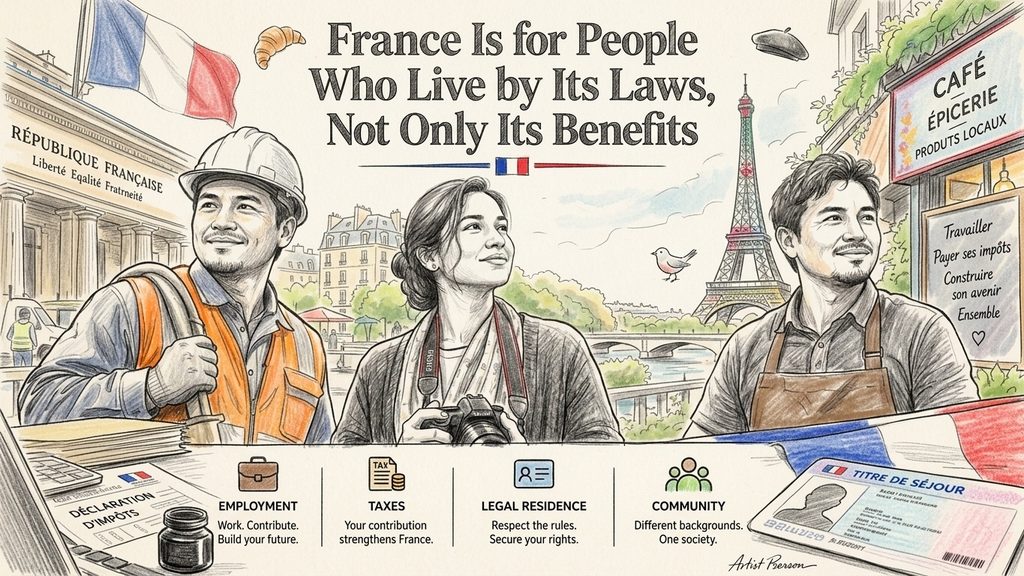
If the asylum system is being used only to secure social benefits, a residence card, or other advantages — without any loyalty to France or respect for its laws — that is a legitimate cause for concern. Living in France should mean more than drawing on the benefits its legal and tax system provides; it should also mean respecting the law, working, contributing to society, and being a responsible member of the local community. France belongs not only to the French, but to everyone who respects its laws and values. Yet no sovereign nation is obliged to indefinitely accommodate people whose only goal is a passport, child-linked benefits, asylum allowances, and social assistance, with no sense of obligation to the country in return. Rather than prioritizing unskilled or criminally implicated individuals, priority should go to skilled workers, creative professionals, and law-abiding immigrants, based on the country’s actual needs.
Genuine refugees and law-abiding, contributing immigrants should not be viewed through the same lens as those making fraudulent asylum claims. Crime and asylum should not be conflated as a single issue. French national politics currently revolves around one central question: who is the country for — citizens, and those who love France and respect its laws, or also those who come only for a passport, child-linked citizenship, and social benefits? France’s asylum system exists for people who genuinely need protection. Preventing abuse of that system and safeguarding the rights of genuine victims are equally necessary.
What Kind of Immigration Does France Actually Need?
If France, or other European countries, need additional labor, a legal, safe, and transparent process is the sustainable long-term answer. Where labor is genuinely needed, France could pursue legal, transparent, demand-based labor agreements with Asian countries like Nepal, building a structured system to select skilled, qualified workers for sectors such as seasonal agriculture, tourism, construction, healthcare, IT, and hospitality. Alongside this, police clearance checks, identity verification, and the authentication of employment and educational documents could all be made more effective.
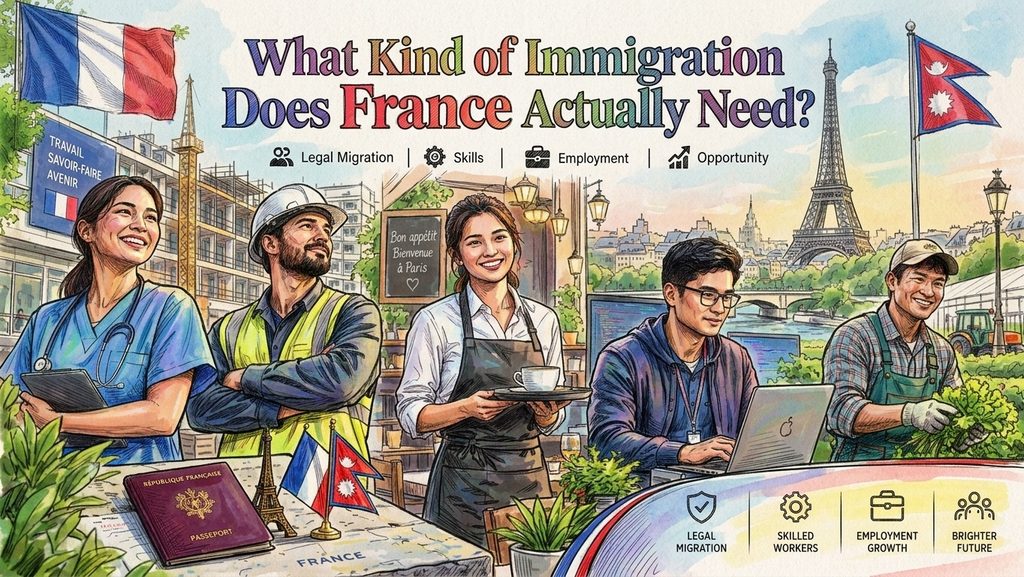
Such an approach offers two clear benefits: France gains the labor it needs, while the role of human traffickers, illegal intermediaries, and unauthorized employment networks is weakened. Concrete steps could include:
- Mandatory police clearance certificates for workers heading abroad on seasonal or other employment visas
- Meeting demand for skilled labor through government-to-government (G2G) coordination, rather than illegal routes or unauthorized intermediaries
- Direct cooperation with the relevant embassies to verify documents and identities submitted in asylum or other immigration applications
The goal is not to stop immigration, but to make it legal, transparent, safe, and needs-based — protecting the rights of genuine workers and genuine refugees while curbing illegal networks and fraud.
Why Nepal–France Document Verification Matters
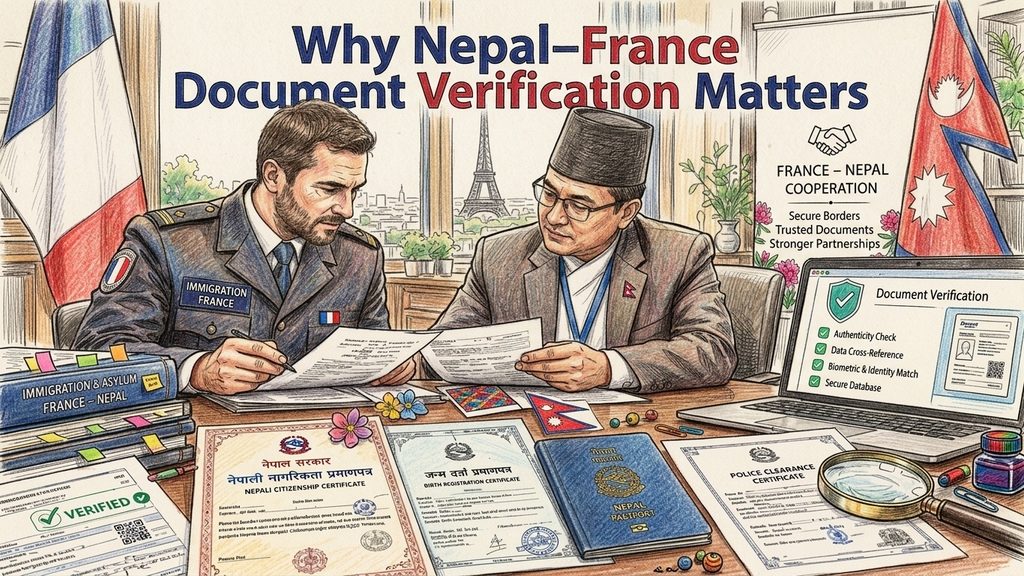
When a Nepali citizen submits citizenship documents, birth registration, marriage or divorce certificates, police clearance certificates, other government paperwork, or even newspaper reports as part of an asylum application, there needs to be an effective mechanism to verify the authenticity and validity of those materials. This calls for stronger legal and diplomatic coordination between the relevant French authorities and the Nepali embassy, along with a functioning system — in coordination with the relevant Nepali government bodies — to authenticate documents flagged as suspicious.
A Question for the Nepali Government, Too

The Nepali government also needs to see the process of sending its citizens to Europe as more than just a foreign-employment opportunity — it must also be viewed in connection with human trafficking, illegal immigration, and the potential misuse of the asylum system. If networks are actively securing seasonal visas to one country and then moving people unlawfully to another, coaching them to prepare false asylum claims or use fabricated documents, that activity warrants investigation and legal action within Nepal itself.
This requires effective coordination between Nepal Police, the Department of Immigration, the foreign-employment authorities, and Nepali missions abroad. Neither the Nepali government nor the Nepali embassy in Paris can step away from this responsibility. Verifying Nepali documents used in asylum applications, sharing information on fugitives where necessary, and investigating and acting against human-trafficking and illegal-intermediary networks can all help bring this cycle under control.
Nepal’s own fake-Bhutanese-refugee case has already shown just how serious an issue refugee-identity fraud can become. Strengthening document verification, information-sharing, and legal cooperation between Nepal and European countries is essential to keep similar patterns from resurfacing in a new form in Europe.
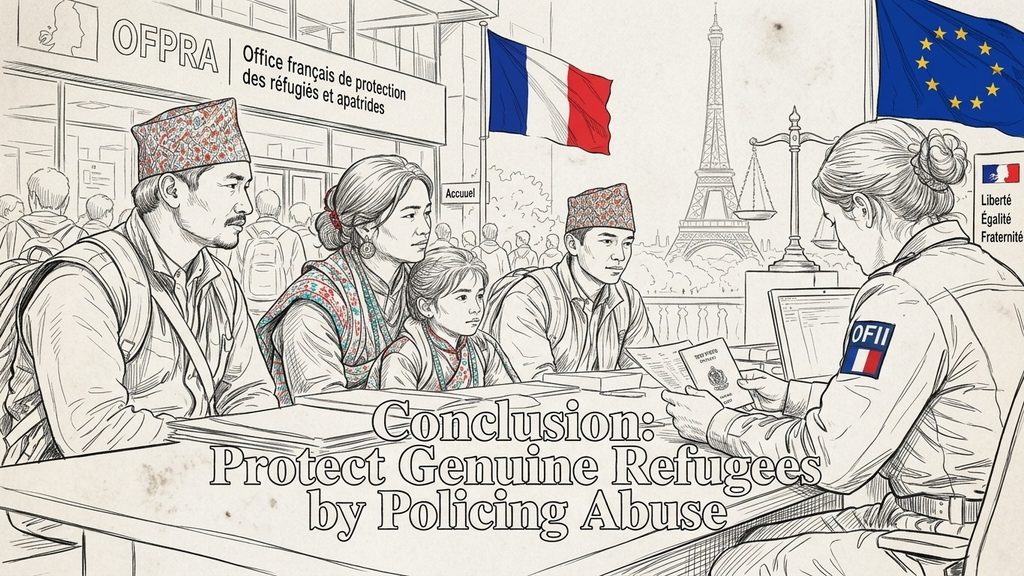
Conclusion
The asylum system exists for genuine victims. Preventing its abuse is itself a way of protecting the rights and protection owed to genuine refugees. This is a debate needed at every level — from Emmanuel Macron’s government to Europe’s broader immigration and asylum architecture. If France needs workers, it can bring them in through legal, seasonal or skills-based agreements with Asian countries, backed by clear selection procedures and necessary security checks, with priority given to police clearance, identity verification, education, skills, and genuine employment need.
Governments should take seriously the pattern of people entering on seasonal visas and later shifting into the asylum system, without adequately weighing genuine education, skills, and employment needs. Where false statements, fabricated documents, or deliberately misleading asylum claims are proven, legal action should follow. Ignoring fraudulent asylum claims isn’t merely an administrative failing — it erodes public trust in the system meant for genuine refugees, and it can raise questions about social tension as well. Crime and asylum should not be treated as one and the same issue, but the potential for abuse between the two must be effectively controlled.

Whether or not RN comes to power in 2027, one question will remain: will France welcome the workers it needs through legal channels, or let the pressure on its asylum system keep building? Nepali society, too, must ask itself a question — do we want to export skill, labor, and integrity, or encourage a pattern of going abroad through false stories and misrepresentation?
If someone submits false information purely to obtain a passport, housing, social benefits, financial assistance, or other advantages, that should be investigated fairly, on the basis of evidence, and through legal process. Ultimately, the goal is not to stop immigration — it is to organize legal immigration, protect genuine refugees, and legally control proven fraud and abuse. That balanced approach is what can sustain public trust in both France’s and Europe’s asylum and immigration systems.
Hashtags:
#France #Immigration #AsylumSystem #MarineLePen #RassemblementNational #French2027Election #NepaliDiaspora #RefugeePolicy #ImmigrationReform #EUPolitics #Nepal #ExpatLife